
Disclosure: Wallstores is reader-supported. As an Amazon Associate, we earn from qualifying purchases made through links on this page, at no extra cost to you. Learn more.
How We Choose the Products We Recommend
We don’t have a warehouse full of gear to physically put through its paces — what we do instead is disciplined research. For every guide, we start with the manufacturer’s published specifications and compare them directly against competing models in the same price range. We track real, current pricing across retailers, not list prices that never actually apply, so the numbers in our comparisons reflect what you’d actually pay today. And we read, in bulk, through verified customer reviews and independent expert coverage for each product, looking for recurring complaints, common praise, and the patterns a single glossy product page won’t tell you.
Where we’ve personally bought and used a product ourselves — currently true for many of the kitchen items we cover — we say so directly in the review, and that firsthand experience shapes what we highlight. For everything else, our pros-and-cons calls come from that cross-referenced research process, not a single source or a rewritten spec sheet. We revisit guides periodically as prices shift and new models launch, and we link to multiple retailers where possible so you’re not stuck with just one option.

Ugo Daniel researches, compares, and writes the buying guides on Wallstores, cross-checking manufacturer specs, verified pricing, and real customer feedback across tech, home, fitness, and pet categories. He’s personally bought and used many of the kitchen appliances featured on the site, and draws on that firsthand experience in those reviews.
Last updated: November 2026 · Written by Ugo Daniel, founder of Wallstores
Winter storms knock out power for millions of homes every year, and an outage in freezing weather is more than an inconvenience. Pipes can burst, food can spoil, and the wrong heating shortcut can be deadly. This checklist covers what to do before, during and after a winter power outage. There’s nothing to buy here. Most of it is planning, and much of it costs nothing.
Before the Outage: Get Ready Now
Make a simple plan
- Decide which room you will “camp” in if the heat goes out. Pick a small interior room with few windows, ideally on the sunny side of the house.
- Agree where family members will meet and how you will contact each other if phones are down.
- Write down important phone numbers on paper: your utility’s outage line, neighbors, doctors and family.
- Know how to report an outage to your power company, and sign up for its text alerts.
- If anyone in your home relies on powered medical equipment, tell your utility. Many keep a priority list.
Stock the basics
- Water: at least one gallon per person per day, for several days. Homes on well water lose their pump in an outage.
- Food: a few days of food that needs no cooking, such as canned goods, peanut butter, crackers and cereal. Don’t forget a manual can opener.
- Light: flashlights or headlamps for each person, with spare batteries. Avoid relying on candles, which are a leading cause of house fires during outages.
- Information: a battery or hand-crank radio with NOAA weather bands. See our emergency radio buying guide for what to look for.
- Warmth: extra blankets, sleeping bags, hats and warm layers for everyone.
- Medications: a week’s supply where possible, plus a basic first aid kit.
- Phone power: keep power banks charged, and keep a car charger in the car.
Protect your home
- Learn where your main water shut-off valve is, so you can turn it off quickly if a pipe bursts.
- Insulate exposed pipes in crawl spaces, garages and exterior walls.
- Test your smoke and carbon monoxide alarms, and replace their batteries.
- If you own a generator, have it serviced and store fuel safely, away from the house.
When a Storm Is Forecast
- Charge every phone, laptop and power bank.
- Fill a few jugs with drinking water, and fill the bathtub for flushing toilets.
- Turn your fridge and freezer to their coldest settings, so food stays cold longer if the power goes out.
- Fill the car’s fuel tank. Gas stations need electricity to pump fuel.
- Get some cash. Card machines and ATMs may not work.
- Bring pets indoors.
During the Outage: Stay Warm and Safe
Never do these
- Never run a generator, grill or camp stove indoors, including in a garage, even with the door open. They produce carbon monoxide, which you can’t see or smell. Keep generators well away from doors, windows and vents.
- Never use a gas oven or stovetop to heat your home.
- Never leave candles or space heaters running unattended or while you sleep.
Keep warm the smart way
- Move everyone into your chosen room and close its doors. Hang blankets over doorways and windows to hold in heat.
- Open curtains on sunny windows during the day, and close them at night.
- Dress in loose layers, wear a hat, and keep feet dry and warm.
- Eat and drink regularly. Your body needs fuel to make heat.
- If you have backup power, put it toward warming people, not rooms. A heated blanket uses around 100 watts, compared with about 1,500 watts for a space heater. Our heated blanket guide explains running costs.
- If you use a space heater on backup power, give it at least three feet of clearance and plug it directly into the power source. Our space heater guide covers safety features to look for.
Protect pipes and appliances
- Let cold-water taps drip slightly, and open cabinet doors under sinks so warmer air reaches the pipes.
- Unplug sensitive electronics, so a power surge doesn’t damage them when power returns. Leave one lamp switched on so you know when the power is back.
Keep food safe
- Keep the fridge and freezer doors closed as much as possible.
- A closed fridge keeps food cold for about 4 hours. A full freezer holds its temperature for about 48 hours (24 hours if half full).
- Don’t put food outside in the snow. Sunlight and animals make it unreliable. A cooler with ice or snow is a better short-term option.
Stay informed and connected
- Use your radio for updates, and save phone battery for calls and messages.
- Check on elderly neighbors and anyone who lives alone.
- If your home gets too cold to stay safe, go to a warming center or a friend’s home. Local authorities usually announce warming centers during long outages.
Know the Warning Signs
Carbon monoxide poisoning: headache, dizziness, weakness, nausea and confusion. If you suspect it, get everyone outside into fresh air immediately and call 911.
Hypothermia: shivering, exhaustion, confusion, slurred speech and drowsiness. Warm the person gradually, get them into dry clothes and seek medical help.
After the Power Comes Back
- Plug appliances back in gradually, to avoid overloading circuits.
- Check food. Throw out perishable food that has been above 40°F for more than 2 hours. When in doubt, throw it out.
- Check for frozen or burst pipes, and look for leaks as pipes thaw.
- Restock what you used, and recharge your radio, flashlights and power banks.
- Write down what worked and what didn’t, so you’re better prepared next time.
Thinking About Backup Power?
If outages are common where you live, a battery power station can keep essentials like a fridge, router, lights and medical devices running, and it’s safe to use indoors. Our portable power station buying guide explains how to size one for your home.
Printable Quick Checklist
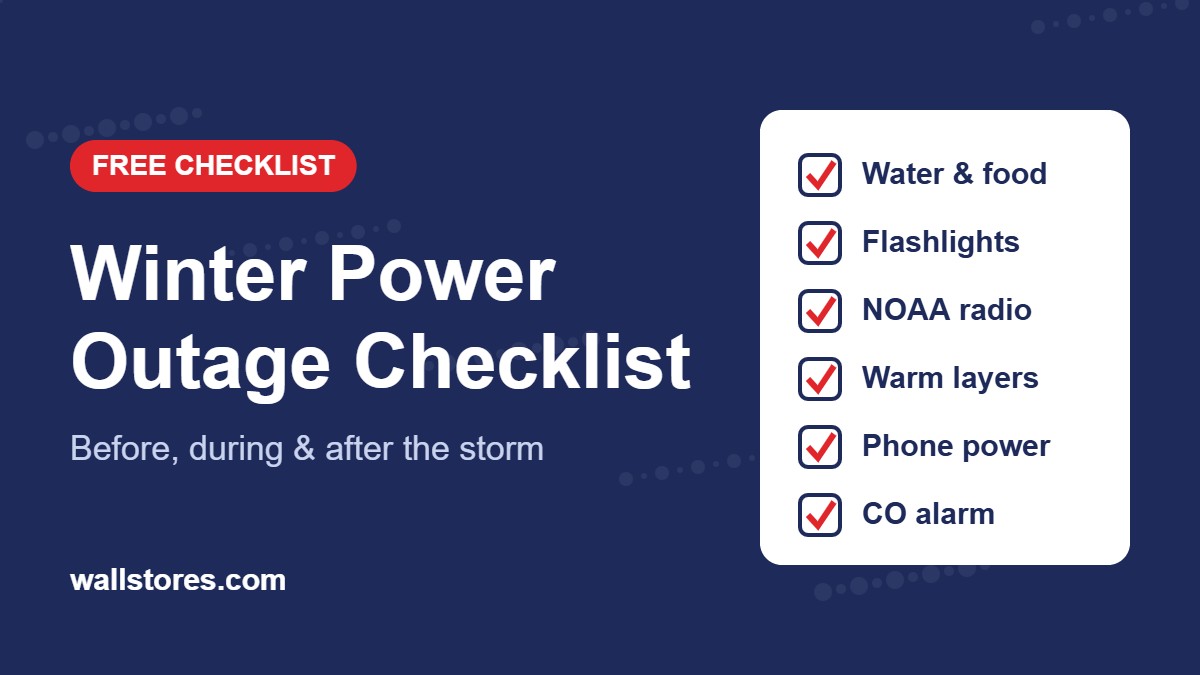
- ☐ Water: 1 gallon per person per day, for several days
- ☐ No-cook food and a manual can opener
- ☐ Flashlights or headlamps and spare batteries
- ☐ Battery or hand-crank NOAA weather radio
- ☐ Blankets, sleeping bags and warm layers
- ☐ Medications and a first aid kit
- ☐ Charged power banks and a car charger
- ☐ Working smoke and CO alarms
- ☐ Important numbers written on paper
- ☐ Cash and a full fuel tank
This guide is general safety information. Always follow instructions from your local emergency officials and utility company.
Ugo Daniel researches, compares, and writes the buying guides on Wallstores, cross-checking manufacturer specs, verified pricing, and real customer feedback across tech, home, fitness, and pet categories. He’s personally bought and used many of the kitchen appliances featured on the site, and draws on that firsthand experience in those reviews.