
How We Choose the Products We Recommend
We don’t have a warehouse full of gear to physically put through its paces — what we do instead is disciplined research. For every guide, we start with the manufacturer’s published specifications and compare them directly against competing models in the same price range. We track real, current pricing across retailers, not list prices that never actually apply, so the numbers in our comparisons reflect what you’d actually pay today. And we read, in bulk, through verified customer reviews and independent expert coverage for each product, looking for recurring complaints, common praise, and the patterns a single glossy product page won’t tell you.
Where we’ve personally bought and used a product ourselves — currently true for many of the kitchen items we cover — we say so directly in the review, and that firsthand experience shapes what we highlight. For everything else, our pros-and-cons calls come from that cross-referenced research process, not a single source or a rewritten spec sheet. We revisit guides periodically as prices shift and new models launch, and we link to multiple retailers where possible so you’re not stuck with just one option.

Ugo Daniel researches, compares, and writes the buying guides on Wallstores, cross-checking manufacturer specs, verified pricing, and real customer feedback across tech, home, fitness, and pet categories. He’s personally bought and used many of the kitchen appliances featured on the site, and draws on that firsthand experience in those reviews.
Almost every plug-in space heater sold in the US maxes out at 1,500 watts, so the real differences are in how they deliver that heat, how safe and quiet they are, and how much control you get. Before you buy, work through these eight points.
1. Measure the Room You Want to Heat
A common rule of thumb is about 10 watts of heat per square foot, so a 1500W heater comfortably handles roughly 150 sq ft as your main heat source, or more if you are only topping up central heating. Small cube heaters suit desks and bedrooms. For big living rooms and basements, look at a high-output infrared model rather than a second cube heater.
2. Choose a Heating Type
Ceramic (PTC) fan heaters are small, cheap and warm you fast. Oil-filled radiators are silent and give gentle, even heat but take longer to warm up. Infrared/quartz heaters warm people and objects directly and work well in larger or drafty spaces.
3. Safety Features Are Non-Negotiable
Look for tip-over protection, overheat shut-off, a cool-touch or flame-retardant housing, and a safety certification such as ETL or UL. Plug the heater directly into a wall outlet, never into an extension cord or power strip, and keep it at least 3 feet from bedding, curtains and furniture.
4. Thermostat and Controls
A real thermostat stops the heater from running flat out all night. Precise digital thermostats (such as the DREO’s 1°F steps) hold the room steadier and use less energy than simple High/Low switches. A remote and timer matter more than you think if the heater lives in a bedroom.
5. Noise Level
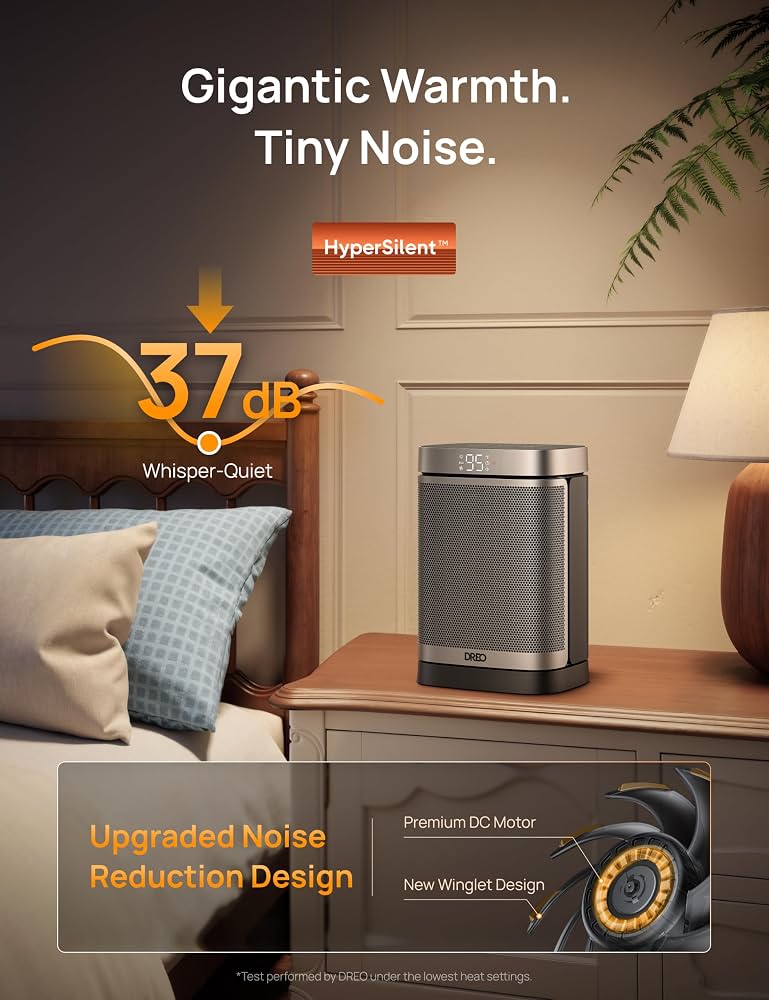
Fan heaters range from about 34 dB (very quiet) to the mid-40s. If you will sleep with it on, go for a low-dB fan heater or a fan-free oil-filled radiator.
6. Oscillation and Heat Spread
Non-oscillating heaters aim warmth at you, which is ideal at a desk. Oscillating towers sweep heat around a room, which suits living rooms where people sit in different places.
7. Running Costs
At full power a 1500W heater uses 1.5 kWh per hour. Multiply by your electricity rate to estimate the cost. ECO modes, thermostats and timers cut this by cycling the heater off once the room is warm. Heating one room is usually cheaper than heating the whole house.
8. Portability and Size
Cube heaters weigh around 3 lbs and move anywhere. Towers and radiators are heavier, so check for handles and wheels. The Dr Infrared, for example, weighs 19 lbs but rolls on casters.
Our Picks by Use Case
| Use Case | Our Pick | Price |
|---|---|---|
| Best overall / bedrooms | DREO Space Heater | $35.13 |
| Tightest budget | Amazon Basics Ceramic Space Heater | $20.69 |
| Small rooms on a budget | GiveBest Portable Ceramic Heater | $25.99 |
| Medium living rooms | Lasko 23″ Ceramic Tower 751320 | $71.99 |
| Large rooms & basements | Dr Infrared Heater DR-968 | $104.99 |
| Silent, fan-free heat | De’Longhi Oil-Filled Radiator EW7707CM | $129.95 |
Related Guides
- Best Space Heaters for Every Budget in 2026
- DREO Space Heater vs. Lasko 751320 Tower: Which Space Heater Wins?
- DREO Space Heater Review: Is It Worth $35 in 2026?
- 5 Best Alternatives to the DREO Space Heater in 2026
- What to Consider Before Buying a Space Heater: A Complete Guide
Ugo Daniel researches, compares, and writes the buying guides on Wallstores, cross-checking manufacturer specs, verified pricing, and real customer feedback across tech, home, fitness, and pet categories. He’s personally bought and used many of the kitchen appliances featured on the site, and draws on that firsthand experience in those reviews.