
Disclosure: Wallstores is reader-supported. As an Amazon Associate, we earn from qualifying purchases made through links on this page, at no extra cost to you. Learn more.
How We Choose the Products We Recommend
We don’t have a warehouse full of gear to physically put through its paces — what we do instead is disciplined research. For every guide, we start with the manufacturer’s published specifications and compare them directly against competing models in the same price range. We track real, current pricing across retailers, not list prices that never actually apply, so the numbers in our comparisons reflect what you’d actually pay today. And we read, in bulk, through verified customer reviews and independent expert coverage for each product, looking for recurring complaints, common praise, and the patterns a single glossy product page won’t tell you.
Where we’ve personally bought and used a product ourselves — currently true for many of the kitchen items we cover — we say so directly in the review, and that firsthand experience shapes what we highlight. For everything else, our pros-and-cons calls come from that cross-referenced research process, not a single source or a rewritten spec sheet. We revisit guides periodically as prices shift and new models launch, and we link to multiple retailers where possible so you’re not stuck with just one option.

Ugo Daniel researches, compares, and writes the buying guides on Wallstores, cross-checking manufacturer specs, verified pricing, and real customer feedback across tech, home, fitness, and pet categories. He’s personally bought and used many of the kitchen appliances featured on the site, and draws on that firsthand experience in those reviews.
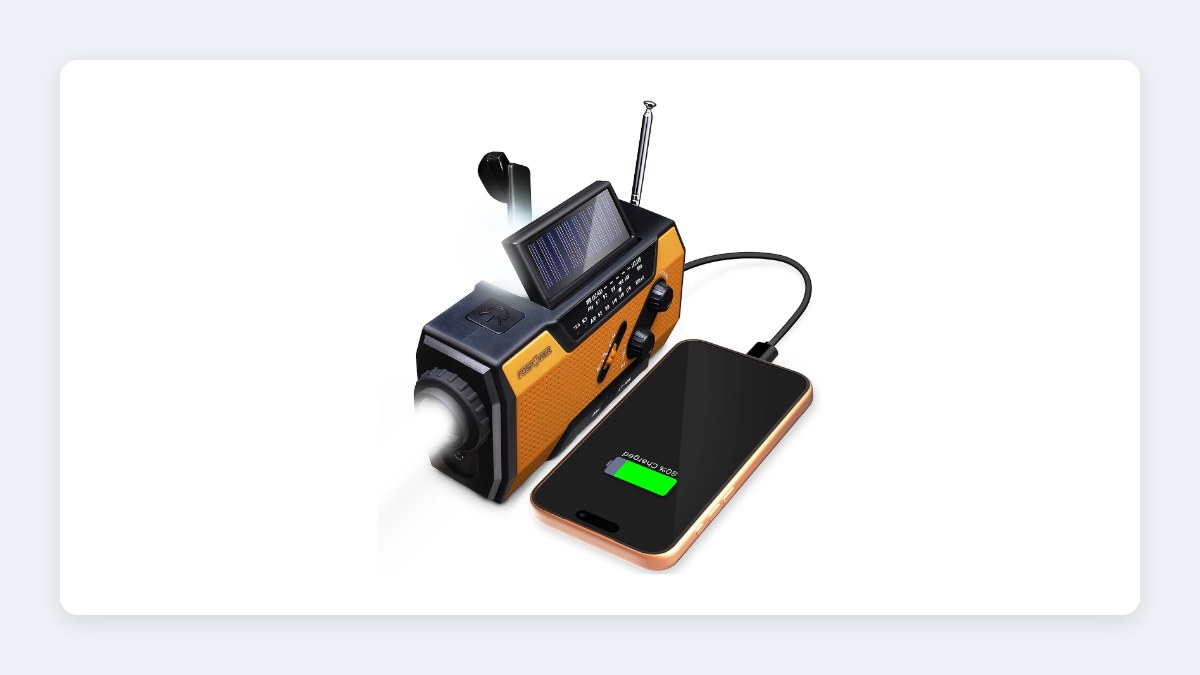
FosPower A1 Emergency Weather Radio

Price: $79.99 · Rating: 4.6/5 (37,996 ratings)
The FosPower A1 is the most-reviewed emergency radio on Amazon, with a 4.6-star average from nearly 38,000 ratings. At $79.99, it costs more than many newer rivals. Here is whether it is still worth it.
Why We Selected It
Few emergency radios have this kind of track record. It combines NOAA weather and AM/FM radio, a phone-charging power bank, two lights and crank and solar charging, all backed by a limited lifetime warranty.
Who It’s For / Who Should Avoid It
It’s for: Households building an emergency kit who want a proven radio, light and charger in one. Avoid it if: You want automatic overnight weather alerts, shortwave bands or the largest possible battery.
Pros
- Huge review base and 4.6-star average
- 2,000mAh (7,400mWh) power bank for phones
- Hand crank and solar charging
- 4-LED reading light and 1W flashlight
- Limited lifetime warranty
Cons
- Smaller power bank than the Leaton or Raynic
- No shortwave bands
- Newer rivals offer automatic alerts for less
Important Specifications
- NOAA weather + AM/FM
- 2,000mAh / 7,400mWh power bank
- 3 power sources including crank and solar
- Reading light and flashlight; limited lifetime warranty
How It Compares With Alternatives
The Raynic ($51.77) is cheaper and adds auto-alerts and a 5,000mAh battery. The Leaton ($47.99) has a 10,000mAh battery and IPX6 rating. The Midland ER310 ($79.99) is the same price with Amazon’s Choice status.
What Type of Buyer Should Choose It
Anyone who values a long, proven track record and a lifetime warranty over the newest features.
What to Consider Before Buying
Make sure the radio receives NOAA weather bands, has at least two ways to charge without mains power, and can charge your phone. Test the crank and charge the battery before storm season, not during it.
Using It in a Real Outage
The FosPower A1 is built to be a grab-and-go tool. In a power cut, you can switch on the reading light to light up a room, tune to the local NOAA weather channel or an AM news station for updates, and plug in your phone for an emergency top-up. If the battery runs low, the hand crank and solar panel can add some charge. Treat cranking as a backup, though, since it takes several minutes to get a short amount of power.
The 2,000mAh power bank is best seen as an emergency reserve for a phone, not a full recharge. If you expect multi-day outages, pair the FosPower with a separate power bank, or look at a radio with a larger battery.
Keeping It Ready
- Charge it fully over USB when you get it, and again every few months.
- Find your clearest local NOAA channel now, not during a storm.
- Store it with your flashlight and first aid kit in a spot you can reach in the dark.
- Check the crank, light and phone charging at the start of each storm season.
What It Does Not Do
The FosPower A1 does not advertise automatic NOAA alerts, so it will not wake you when a warning is issued. You need to turn it on and listen. If overnight tornado or flood warnings are a concern where you live, either add an alert radio to your home or choose a model like the Raynic that scans for alerts. It also lacks shortwave bands, which matters only to hobby listeners and people preparing for very large-scale disasters.
Who Should Consider It
- Families building their first emergency kit who want one proven device that does several jobs.
- Campers and road-trippers who want a radio and light that will not let them down.
- Gift buyers looking for a practical, well-reviewed preparedness gift.
Frequently Asked Questions
Can the FosPower A1 fully charge my phone?
Not usually. Its 2,000mAh power bank gives most phones a partial top-up, enough for calls and messages during an emergency.
Is it waterproof?
It is not designed to be submerged. Keep it dry, and look at a model with a higher IPX rating, such as the Leaton, if you need serious water resistance.
Verdict
Yes, the FosPower A1 is worth it if you want peace of mind. Nearly 38,000 ratings at 4.6 stars and a lifetime warranty make it the safest choice for an emergency kit. If you want automatic alerts or a bigger battery for less, look at the Raynic instead.
Related Guides
- Best Emergency Weather Radios for Every Budget in 2026
- FosPower A1 vs. Raynic Emergency Radio: Which Weather Radio Wins?
- FosPower A1 Emergency Weather Radio Review: Is It Worth $80 in 2026?
- 5 Best Alternatives to the FosPower A1 Emergency Radio in 2026
- What to Consider Before Buying an Emergency Weather Radio: A Complete Guide
Ugo Daniel researches, compares, and writes the buying guides on Wallstores, cross-checking manufacturer specs, verified pricing, and real customer feedback across tech, home, fitness, and pet categories. He’s personally bought and used many of the kitchen appliances featured on the site, and draws on that firsthand experience in those reviews.