
How We Choose the Products We Recommend
We don’t have a warehouse full of gear to physically put through its paces — what we do instead is disciplined research. For every guide, we start with the manufacturer’s published specifications and compare them directly against competing models in the same price range. We track real, current pricing across retailers, not list prices that never actually apply, so the numbers in our comparisons reflect what you’d actually pay today. And we read, in bulk, through verified customer reviews and independent expert coverage for each product, looking for recurring complaints, common praise, and the patterns a single glossy product page won’t tell you.
Where we’ve personally bought and used a product ourselves — currently true for many of the kitchen items we cover — we say so directly in the review, and that firsthand experience shapes what we highlight. For everything else, our pros-and-cons calls come from that cross-referenced research process, not a single source or a rewritten spec sheet. We revisit guides periodically as prices shift and new models launch, and we link to multiple retailers where possible so you’re not stuck with just one option.

Ugo Daniel researches, compares, and writes the buying guides on Wallstores, cross-checking manufacturer specs, verified pricing, and real customer feedback across tech, home, fitness, and pet categories. He’s personally bought and used many of the kitchen appliances featured on the site, and draws on that firsthand experience in those reviews.
Last updated: September 2026
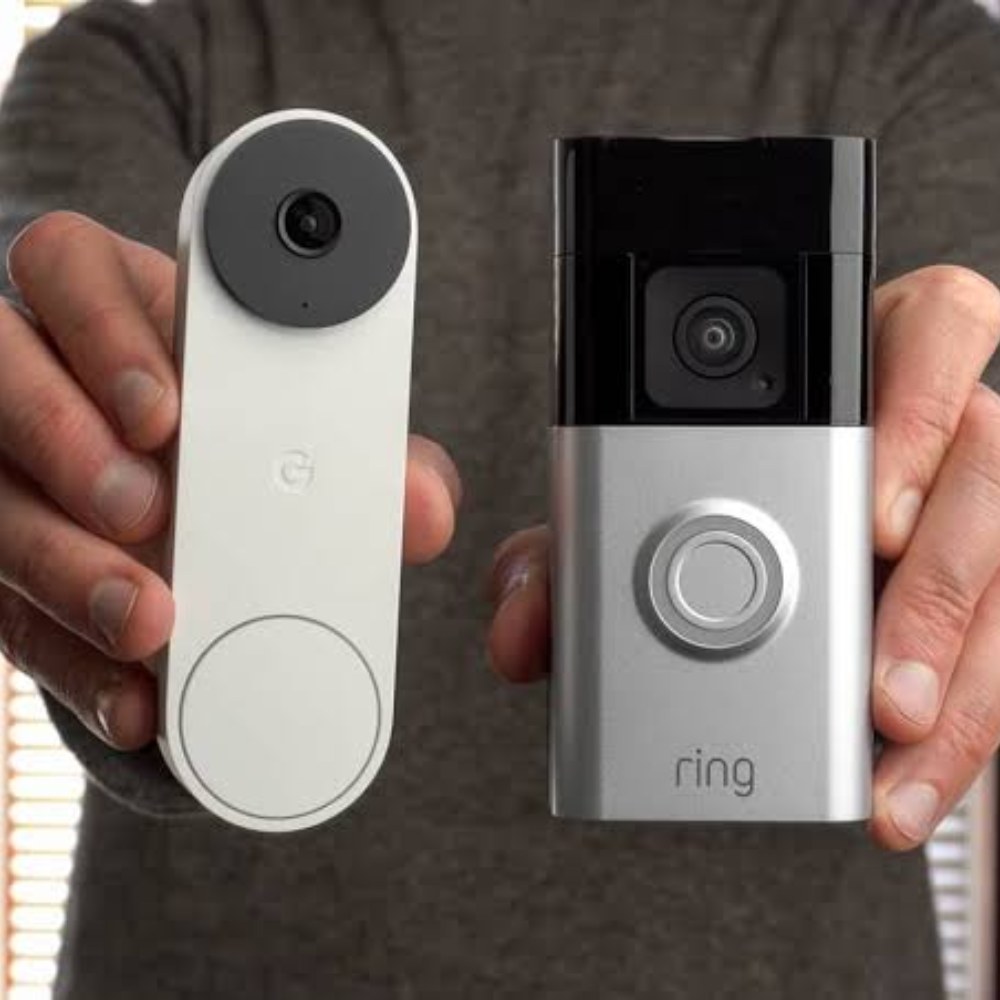
Ring and Blink, both owned by Amazon, cover most of the smart doorbell market between them, but they’re built for different budgets and different levels of commitment. Ring leans premium with sharper video and deeper Alexa integration; Blink keeps things simple and cheap, often skipping the subscription entirely. We also looked at two strong outsiders, Eufy and Google Nest, for buyers who want dual cameras or hands-off local storage without a monthly fee. Below are five current doorbell models, what they cost, whether they require a subscription to be genuinely useful, and who each one actually makes sense for in 2026.
Quick Comparison
| Product | Best For | Price | Subscription Required | |
|---|---|---|---|---|
| Ring Wired Doorbell Pro (4K) | Best Ring Overall | $249.99 MSRP | Optional (live view free; Ring Protect needed for recordings) | See Price on Amazon → |
| Ring Wired Doorbell 2K | Best Ring Budget | $79.99 MSRP (frequently $49.99 on sale) | Optional (live view and talk free; recordings need Ring Protect) | See Price on Amazon → |
| Blink Video Doorbell (with Sync Module Core) | Best Blink Overall | $59.99 (MSRP $69.99-$79.99) | No (local storage via Sync Module; cloud clips optional) | See Price on Amazon → |
| eufy Security Video Doorbell E340 | Best Overall Alternative | $119.98 | No (8GB built-in local storage, no subscription required) | See Price on Amazon → |
| Google Nest Doorbell (Battery) | Best for Google/Nest Households | $157.99 | Optional (3 hrs free event video; Nest Aware for full history) | See Price on Amazon → |
1. Ring Wired Doorbell Pro (4K) — Best Ring Overall
 The Wired Doorbell Pro is Ring’s current flagship doorbell and the clearest example of why people pay a premium for the brand: Retinal 4K video, up to 10x Enhanced Zoom, 3D Motion Detection with adjustable zones, and a fast, reliable connection to Alexa devices for instant announcements. Compared to Blink’s lineup, video quality and motion accuracy are noticeably sharper, and head-to-toe framing avoids the cut-off-package problem cheaper doorbells struggle with. It’s hardwired-only, so you’ll need existing doorbell wiring, a step up in install effort from Blink’s battery-first design. And like every Ring device, the most useful features, recorded video history, person alerts, really do need a Ring Protect subscription to be worthwhile long-term. If you want the best Ring offers and don’t mind the wiring and the subscription, this is it. On Amazon, it holds a 4.3-star average across more than 1,600 ratings.
Pros: Retinal 4K video, sharpest in Ring’s lineup, Deep, fast Alexa integration, Head-to-toe framing, 3D Motion Detection with up to 10x zoom.
Cons: Hardwired only, no battery option, Core features require a Ring Protect subscription.
2. Ring Wired Doorbell 2K — Best Ring Budget
 Ring’s cheapest current wired doorbell proves the brand doesn’t need a triple-digit price tag to be competent. 2K resolution and a wide 140-degree field of view are genuinely good specs for the price, and 6x enhanced zoom helps identify porch details that budget Blink models sometimes miss. It’s a hardwired-only unit, so you’ll need existing doorbell wiring and a compatible transformer, no battery option here, unlike Blink’s more flexible lineup. Live view, two-way talk, and motion alerts all work without paying anything extra, a real point in Ring’s favor against critics who say every feature is paywalled. The catch is the usual one: recorded video history and smart alerts still require Ring Protect. For anyone with existing doorbell wiring who wants Ring’s ecosystem without flagship pricing, this is the doorbell to buy. It carries a 4.2-star average across more than 2,100 Amazon ratings.
Pros: 2K video and wide field of view for the price, Live view and two-way talk work without a subscription, 6x enhanced zoom, Easy Alexa/Ring app integration.
Cons: Wired-only, no battery option, Recording history still needs Ring Protect.
3. Blink Video Doorbell (with Sync Module Core) — Best Blink Overall
 Blink’s whole pitch is ‘good enough security without the ongoing cost,’ and the current Video Doorbell delivers on that better than almost anything else in this roundup. Two-year battery life on standard batteries, head-to-toe 1440×1440 framing, and reliable motion alerts cover the essentials most homeowners actually need. It’s noticeably slower to trigger and less sharp in low light than the Ring Wired Doorbell Pro above, and Alexa integration, while present, isn’t quite as instant. What sets Blink apart from Ring is the subscription model: with a Sync Module and USB flash drive, you can store clips locally with zero monthly fee, something no current Ring doorbell offers. For anyone who wants smart doorbell basics without signing up for anything recurring, this remains Blink’s best all-around pick and the strongest budget counter to Ring. It’s one of the best-reviewed doorbells on this list, holding a 4.1-star average across more than 13,000 Amazon ratings.
Pros: Local storage option with zero subscription cost, Two-year battery life on standard batteries, Head-to-toe 1440×1440 video, Easy DIY install, battery or wired.
Cons: Slower motion trigger and dimmer night vision than Ring’s flagship, Local storage requires a separate Sync Module and USB drive.
4. eufy Security Video Doorbell E340 — Best Overall Alternative
 Eufy’s E340 is the pick for anyone who’s tired of subscriptions entirely. Its dual-camera design, a top-down window plus a face-height camera, genuinely reduces the classic ‘headless package’ framing problem better than either Ring or Blink manage with a single lens, and 8GB of built-in local storage (roughly 60 days of clips) means zero monthly fees for full recording history, not just live view. 2K resolution and color night vision hold up well against the Ring Wired Doorbell Pro in side-by-side comparisons. The HomeBase ecosystem, sold separately for some bundles, adds a layer of setup complexity Ring and Blink don’t have, and Eufy’s Alexa/Google integration, while functional, isn’t as polished as Amazon’s own hardware. Still, for genuinely subscription-free smart security with better framing than the big two, this is the strongest outsider pick here. It holds a 4.1-star average across more than 4,300 Amazon ratings.
Pros: Dual cameras reduce awkward package/face framing, 60 days of local storage, no subscription needed, 2K resolution with color night vision, Competitive price vs. Ring’s flagship.
Cons: HomeBase setup adds complexity for some bundles, Alexa/Google integration less seamless than Ring’s.
5. Google Nest Doorbell (Battery) — Best for Google/Nest Households
 For households already living in the Google/Nest ecosystem, this doorbell is the obvious non-Ring, non-Blink pick. It gives 3 hours of free event video history without any subscription, which quietly beats both Ring and Blink’s free tiers, and on-device intelligence for familiar face and package alerts works well without a paid plan for basic smarts. Video quality is solid but not class-leading: the Ring Wired Doorbell Pro and Eufy’s E340 both edge it out on resolution and night detail. Battery life is good, but charging requires removing the whole unit rather than swapping a battery pack like some competitors allow. Integration with Google Home, Nest speakers, and Chromecast displays is where it really shines, showing doorbell feeds instantly on a Nest Hub. If your smart home already runs on Google, this is the doorbell that fits without a second thought. It carries a 4.2-star average across more than 5,000 Amazon ratings.
Pros: 3 hours of free event video, no subscription needed, Strong Google Home/Nest Hub integration, On-device face and package recognition, Simple setup.
Cons: Video resolution trails Ring’s flagship and Eufy E340, Charging requires removing the whole doorbell.
Related Guides
Ugo Daniel researches, compares, and writes the buying guides on Wallstores, cross-checking manufacturer specs, verified pricing, and real customer feedback across tech, home, fitness, and pet categories. He’s personally bought and used many of the kitchen appliances featured on the site, and draws on that firsthand experience in those reviews.