
How We Choose the Products We Recommend
We don’t have a warehouse full of gear to physically put through its paces — what we do instead is disciplined research. For every guide, we start with the manufacturer’s published specifications and compare them directly against competing models in the same price range. We track real, current pricing across retailers, not list prices that never actually apply, so the numbers in our comparisons reflect what you’d actually pay today. And we read, in bulk, through verified customer reviews and independent expert coverage for each product, looking for recurring complaints, common praise, and the patterns a single glossy product page won’t tell you.
Where we’ve personally bought and used a product ourselves — currently true for many of the kitchen items we cover — we say so directly in the review, and that firsthand experience shapes what we highlight. For everything else, our pros-and-cons calls come from that cross-referenced research process, not a single source or a rewritten spec sheet. We revisit guides periodically as prices shift and new models launch, and we link to multiple retailers where possible so you’re not stuck with just one option.

Ugo Daniel researches, compares, and writes the buying guides on Wallstores, cross-checking manufacturer specs, verified pricing, and real customer feedback across tech, home, fitness, and pet categories. He’s personally bought and used many of the kitchen appliances featured on the site, and draws on that firsthand experience in those reviews.
Last updated: October 2026 · Written by Ugo Daniel
Instant cameras have had a real comeback, and the category now splits into Fujifilm’s Instax lineup (small, affordable, credit-card-sized prints) and Polaroid’s classic square format (bigger, more nostalgic, pricier film). We compared four current models using verified Amazon pricing and review data for each.
How we research this guide: every price, rating, and review count below comes directly from each product’s live Amazon listing at the time of writing, cross-checked against the manufacturer’s spec sheet. We don’t accept free review units from these brands, and we don’t claim to have tested each camera ourselves — this is a comparison of verified specs and real buyer feedback, not a hands-on test.
Quick Comparison
| Product | Best For | Price | Rating | |
|---|---|---|---|---|
| Fujifilm Instax Mini 12 | Best Overall | $82.99 | 4.6/5 (1.5K) | See Price on Amazon → |
| Fujifilm Instax Mini EVO | Best Premium/Hybrid | $199.00 | 4.6/5 (2K) | See Price on Amazon → |
| Polaroid Now (3rd Gen) | Best Classic Square Format | $129.00 | 4.1/5 (1.5K) | See Price on Amazon → |
| Fujifilm Instax Wide 400 | Best for Large Prints | $149.95 | 4.0/5 (331) | See Price on Amazon → |
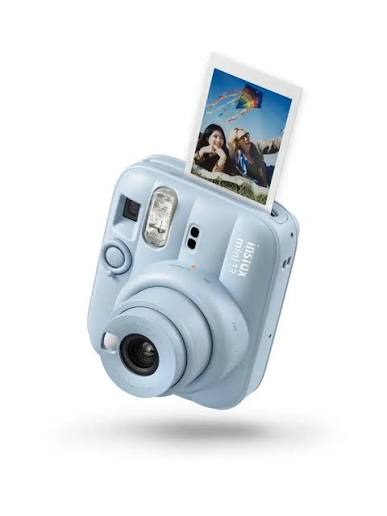
1. Fujifilm Instax Mini 12 — Best Overall

Why we selected it: With a 4.6-star average across 1,500+ ratings and the lowest price-to-feature ratio in the Instax lineup, it’s the default instant camera most first-time buyers should start with.
Who it’s for: Casual users, teens, and anyone buying their first instant camera as a gift.
Who should avoid it: Buyers who want more manual control or hybrid digital/print features — those live in the pricier Mini EVO.
Pros: Excellent price-to-feature ratio • Automatic exposure adjustment • Simple, foolproof operation • Wide range of fun colors.
Cons: No manual exposure control • Mini-format prints are small (credit-card sized).
Important specs: Instax Mini film, automatic exposure, selfie mirror, close-up mode
What type of buyer should choose it: Best for buyers who want the simplest, most affordable entry into instant photography.
2. Fujifilm Instax Mini EVO — Best Premium/Hybrid

Why we selected it: It’s a hybrid digital camera that lets you preview, edit, and crop a shot on its screen before printing — genuinely solving instant film’s biggest complaint (wasted prints) — with the highest review count on this list (2,000+).
Who it’s for: Buyers who want creative control and don’t want to waste expensive film on a bad shot.
Who should avoid it: Budget buyers — it costs more than double the Mini 12 for features casual users may not need.
Pros: Preview and edit before printing (no wasted film) • 10 lens effects and 10 film effects built in • Highest review count here • Premium metal-bodied design.
Cons: Most expensive option on this list • More to learn than a simple point-and-shoot Instax.
Important specs: Hybrid digital/instant, built-in screen, 20+ in-camera effects, Instax Mini film
What type of buyer should choose it: Best for buyers who want creative control and hate wasting film on bad shots.
3. Polaroid Now (3rd Generation) — Best Classic Square Format

Why we selected it: For buyers who specifically want the classic square Polaroid look rather than Instax’s smaller rectangular format, the Now 3rd Gen is the current standard-bearer, backed by 1,500+ ratings.
Who it’s for: Buyers who want the iconic square Polaroid print format, not Instax’s smaller mini prints.
Who should avoid it: Budget-conscious buyers — Polaroid film costs noticeably more per shot than Instax film.
Pros: Iconic, larger square print format • Comes bundled with a starter film pack • Autofocus lens • Distinctive retro design.
Cons: Lowest rating of the four on this list • Polaroid film is pricier per shot than Instax film.
Important specs: Polaroid i-Type film, autofocus, built-in flash, self-timer
What type of buyer should choose it: Best for buyers who specifically want the classic square Polaroid format over Instax’s smaller prints.
4. Fujifilm Instax Wide 400 — Best for Large Prints

Why we selected it: It’s the only camera on this list using Instax’s larger Wide-format film — roughly double the print size of a standard Instax Mini — which matters if you actually want to see detail in your printed photos.
Who it’s for: Buyers who find Instax Mini prints too small and want noticeably bigger, more detailed photos without jumping to Polaroid.
Who should avoid it: Buyers who want the widest camera selection to choose from — Wide-format cameras and film are a smaller product line than Mini-format.
Pros: Largest print size on this list • Still uses affordable-ish Instax film system • Good for group photos and detail shots.
Cons: Smallest review base here • Bulkier body than Mini-format cameras.
Important specs: Instax Wide film, automatic exposure, bulkier wide-format body
What type of buyer should choose it: Best for buyers who want noticeably bigger prints than standard Instax Mini cameras produce.
How to Pick Between These Four
If you want the simplest, most affordable entry into instant photography, the Instax Mini 12 is the obvious starting point. If you hate wasting film on bad shots and want to preview before printing, the hybrid Instax Mini EVO solves that problem directly, at a price. If the iconic square Polaroid look matters more to you than Instax’s rectangular format, the Polaroid Now is the current standard despite costing more per print. And if Instax Mini prints feel too small, the Instax Wide 400 doubles your print size while staying in the Instax ecosystem.
What to Consider Before Buying an Instant Camera
Film cost adds up fast and varies significantly by format — Instax Mini film is the cheapest per shot, Instax Wide costs more, and Polaroid’s i-Type film is the most expensive of the three. Print size is a genuine tradeoff: Mini-format prints are small and portable, Wide and Polaroid formats show more detail but cost more and make bulkier cameras. If you’re prone to wasting shots, a hybrid digital/instant model like the Mini EVO lets you preview before committing film, which pays for itself over time in saved film costs. Finally, think about how you’ll actually use the prints — scrapbooking and photo walls favor smaller Mini prints, while gifts and keepsakes often look better in the larger Wide or Polaroid format.
Related Guides
Ugo Daniel researches, compares, and writes the buying guides on Wallstores, cross-checking manufacturer specs, verified pricing, and real customer feedback across tech, home, fitness, and pet categories. He’s personally bought and used many of the kitchen appliances featured on the site, and draws on that firsthand experience in those reviews.