How We Choose the Products We Recommend
We don’t have a warehouse full of gear to physically put through its paces — what we do instead is disciplined research. For every guide, we start with the manufacturer’s published specifications and compare them directly against competing models in the same price range. We track real, current pricing across retailers, not list prices that never actually apply, so the numbers in our comparisons reflect what you’d actually pay today. And we read, in bulk, through verified customer reviews and independent expert coverage for each product, looking for recurring complaints, common praise, and the patterns a single glossy product page won’t tell you.
Where we’ve personally bought and used a product ourselves — currently true for many of the kitchen items we cover — we say so directly in the review, and that firsthand experience shapes what we highlight. For everything else, our pros-and-cons calls come from that cross-referenced research process, not a single source or a rewritten spec sheet. We revisit guides periodically as prices shift and new models launch, and we link to multiple retailers where possible so you’re not stuck with just one option.

Ugo Daniel researches, compares, and writes the buying guides on Wallstores, cross-checking manufacturer specs, verified pricing, and real customer feedback across tech, home, fitness, and pet categories. He’s personally bought and used many of the kitchen appliances featured on the site, and draws on that firsthand experience in those reviews.
Last updated: September 2026 · Written by Ugo Daniel, founder of Wallstores
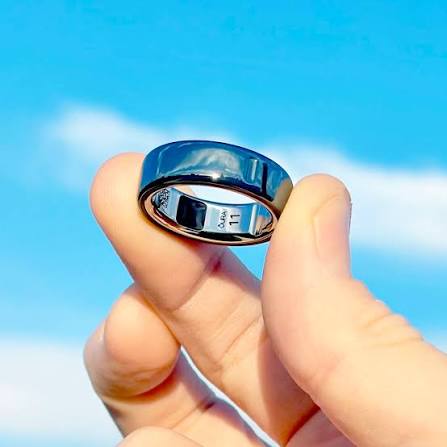
Smart rings had a real breakout year: Oura proved people will wear a health tracker that doesn’t look like a health tracker, and a wave of competitors followed with their own take on sleep, heart rate, and recovery tracking in a band you barely notice. The catch is that “smart ring” now covers everything from a $500 wellness platform with a required subscription to a $40 no-frills tracker that just reports the basics to your phone. We looked at five current models spanning that whole range — what each one actually measures, whether it charges its own way or needs a case, and what it costs before you commit to a size and a subscription you can’t easily return.
How we research this guide: every price, rating, and review count below comes directly from each product’s live Amazon listing at the time of writing, cross-checked against the manufacturer’s own spec sheet. We don’t accept free review units from these brands, and we don’t claim to have worn each ring ourselves — this is a comparison of verified specs and real buyer feedback, not a hands-on test.
Quick Comparison
| Product | Best For | Price | Rating | |
|---|---|---|---|---|
| Oura Ring 5 | Best Overall | $491.00 | 4.4/5 (2.1K ratings) | See Price on Amazon → |
| RingConn Gen 3 | Best New Release | $349.00 | 4.4/5 (952 ratings) | See Price on Amazon → |
| RingConn Gen 2 (Sleep Apnea Monitoring) | Best Value | $299.00 | 4.0/5 (7.2K ratings) | See Price on Amazon → |
| RingConn Gen 2 Air Ultra-Thin | Best Lightweight | $199.00 | 4.2/5 (4.9K ratings) | See Price on Amazon → |
| Smart Ring with Sleep/HR/SpO2 Tracking | Best Budget | $43.19 | 4.7/5 (123 ratings) | See Price on Amazon → |
1. Oura Ring 5 — Best Overall
 Oura basically created the mainstream smart ring category, and the Ring 5 is the clearest sign the platform is still ahead of the pack: a redesigned sensor array, a more accurate heart-rate path, and the same Readiness/Sleep/Activity score system that made the brand a household name among people who obsess over recovery data. The titanium shell feels genuinely durable for something worn 24/7, and battery life comfortably covers several days between charges. The tradeoff that trips people up every time is the subscription — the ring itself is only half the cost of ownership, since the full feature set requires an ongoing Oura membership. If you’re fine paying monthly for the software layer, this is still the ring other brands are chasing. It holds a 4.4-star average across 2,100+ Amazon ratings.
Pros: Most mature app and data platform in the category, Accurate sleep-stage and readiness scoring, Durable titanium build, Multiple finishes and sizes available.
Cons: Requires a paid monthly membership for full features, Priced well above most competitors.
2. RingConn Gen 3 — Best New Release
 RingConn built its reputation on being the “no subscription” answer to Oura, and the Gen 3 pushes that further with refined vascular sensing aimed at more consistent blood pressure trend data alongside the usual sleep and activity tracking. Every core metric is unlocked in the free app, which is still the single biggest reason people switch away from Oura. The charging case doubles as a portable power bank for the ring, which is a genuinely useful touch for anyone who forgets to charge devices on a schedule. It’s newer to market than the Gen 2 line, so the review count is still climbing, but early ratings track well ahead of most of the category. It carries a 4.4-star average across 950+ Amazon ratings so far.
Pros: No required subscription for core metrics, Portable charging case doubles as a power bank, Newer vascular sensing hardware, Comfortable for continuous wear.
Cons: Smaller review base than the established Gen 2 line, Premium price close to Oura’s entry point.
3. RingConn Gen 2 (Sleep Apnea Monitoring) — Best Value
 The original Gen 2 is still RingConn’s best-selling ring by a wide margin, and the review count backs that up — over 7,200 ratings is more feedback than most smart rings on Amazon combined. Its standout feature is built-in sleep apnea risk monitoring, a metric that’s usually locked behind a subscription or missing entirely on rings at this price. Battery life is rated around 7 days per charge, and like the Gen 3, there’s no membership fee required to see your full sleep, activity, and vitals data. It runs slightly thicker than the Air Ultra-Thin version below, which some buyers notice during typing or gym sessions. For anyone who wants Oura-style tracking without an ongoing bill, this remains the ring most people land on. It holds a 4.0-star average across 7,200+ Amazon ratings.
Pros: No subscription required, Built-in sleep apnea risk monitoring, Largest review base in the category, About 7 days of battery per charge.
Cons: Bulkier profile than ultra-thin competitors, Rating average trails the newer Gen 3.
4. RingConn Gen 2 Air Ultra-Thin — Best Lightweight
 Same sensor platform as the standard Gen 2, shrunk into a noticeably slimmer band for people who found the regular ring too bulky under gloves, gym grips, or just against other jewelry. It gives up a bit of battery life for the smaller size but keeps the no-subscription model and the same sleep, HRV, and activity tracking. At nearly 5,000 Amazon ratings, it’s proven itself as one of the more trusted mid-tier options rather than a niche variant. If comfort and low profile matter more to you than squeezing out every last day of battery, this is the version of the RingConn platform worth picking. It carries a 4.2-star average across 4,900+ Amazon ratings.
Pros: Noticeably thinner and lighter than standard smart rings, No subscription required, Same core RingConn tracking accuracy, Strong review volume for a lower-price tier.
Cons: Shorter battery life than the standard Gen 2, Fewer advanced metrics than sleep-apnea model.
5. Smart Ring with Sleep/HR/SpO2 Tracking — Best Budget
 At under $45, this is the ring for someone who wants to try the category without committing real money to it. It covers the fundamentals — sleep tracking, heart rate, blood oxygen, step counting — through a free companion app with no subscription anywhere in sight, and it’s IP68 waterproof with a rated 5-day battery life. It won’t match Oura or RingConn on data depth or sensor sophistication, and the companion app is noticeably more basic. But for testing whether you’ll actually wear a ring 24/7 before spending $300+, it does the job. It holds a strong 4.7-star average, though on a much smaller base of 123 Amazon ratings.
Pros: Extremely low cost of entry, No subscription required, Covers sleep, heart rate, and SpO2 basics, IP68 waterproof rating.
Cons: Smaller review base than established brands, App and data depth well behind premium rings.
Related Guides
Ugo Daniel researches, compares, and writes the buying guides on Wallstores, cross-checking manufacturer specs, verified pricing, and real customer feedback across tech, home, fitness, and pet categories. He’s personally bought and used many of the kitchen appliances featured on the site, and draws on that firsthand experience in those reviews.