
Disclosure: Wallstores is reader-supported. As an Amazon Associate, we earn from qualifying purchases made through links on this page, at no extra cost to you. Learn more.
How We Choose the Products We Recommend
We don’t have a warehouse full of gear to physically put through its paces — what we do instead is disciplined research. For every guide, we start with the manufacturer’s published specifications and compare them directly against competing models in the same price range. We track real, current pricing across retailers, not list prices that never actually apply, so the numbers in our comparisons reflect what you’d actually pay today. And we read, in bulk, through verified customer reviews and independent expert coverage for each product, looking for recurring complaints, common praise, and the patterns a single glossy product page won’t tell you.
Where we’ve personally bought and used a product ourselves — currently true for many of the kitchen items we cover — we say so directly in the review, and that firsthand experience shapes what we highlight. For everything else, our pros-and-cons calls come from that cross-referenced research process, not a single source or a rewritten spec sheet. We revisit guides periodically as prices shift and new models launch, and we link to multiple retailers where possible so you’re not stuck with just one option.

Ugo Daniel researches, compares, and writes the buying guides on Wallstores, cross-checking manufacturer specs, verified pricing, and real customer feedback across tech, home, fitness, and pet categories. He’s personally bought and used many of the kitchen appliances featured on the site, and draws on that firsthand experience in those reviews.
Insulated bottles all promise cold water for hours, but the right one depends on where you drink and how you carry it. Before you buy, check these eight things.
1. Bottle or Tumbler?
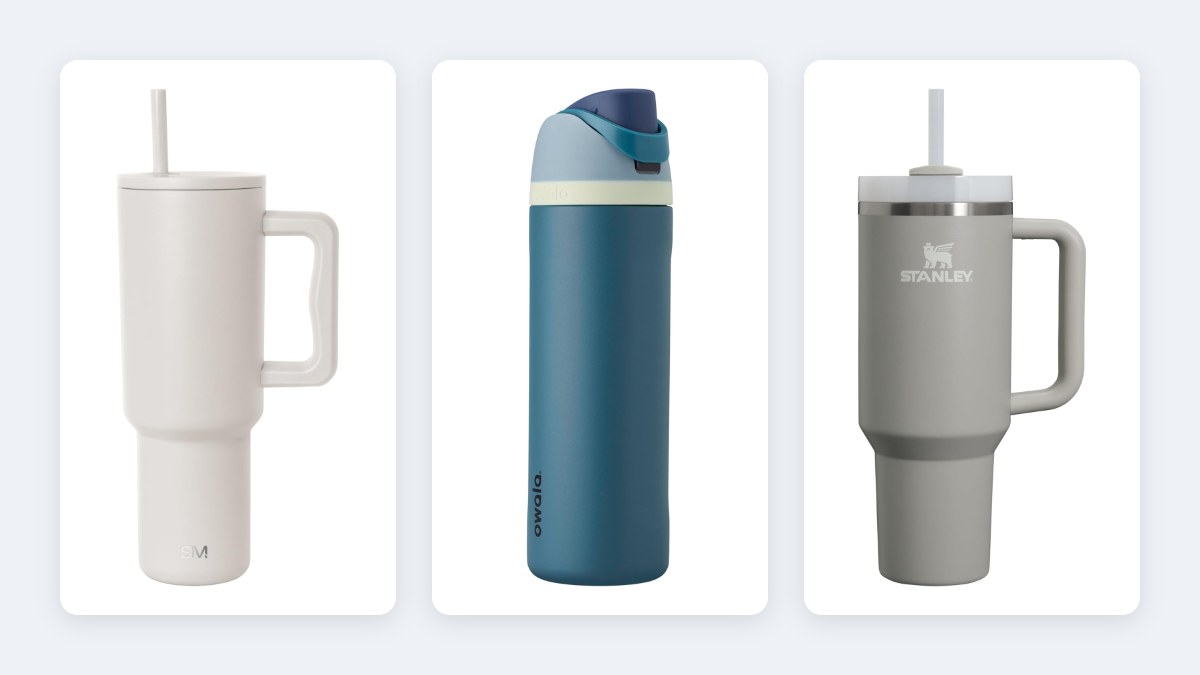
A bottle with a sealed lid (Owala, Hydro Flask) is made to ride in a bag. A tumbler with a handle and straw (Stanley, Simple Modern) is built for desks and cupholders and is usually not leakproof.
2. Capacity
20–24 oz is easy to carry; 32–40 oz means fewer refills. If you track a daily water goal, a bigger bottle helps.
3. Lid Type
Choose between a straw, a chug spout, a sip-or-swig spout (Owala FreeSip), or a simple screw cap. Locking lids are best for bags.
4. Leakproof vs. Leak-Resistant
“Leak-resistant” usually means it won’t spill if it tips over on a desk. “Leakproof” means you can throw it in a backpack. Check before you pack it with your laptop.
5. Cupholder Fit
Many 40-oz tumblers taper to fit car cupholders, while some wide bottles, including the Owala FreeSip, do not.
6. Insulation Performance
Double-wall vacuum insulation is standard. Look for stated hold times (for example, 24 hours cold and 12 hours hot) if temperature matters to you.
7. Cleaning
Dishwasher-safe bodies and lids save time. Straws and complex lids need regular deep cleaning, so check whether parts come apart.
8. Warranty and Materials
Stainless steel bottles last for years. Some brands, like Stanley, offer lifetime warranties, and many advertise BPA-free lids.
What Size Do You Actually Need?
| Where you drink | Good size |
|---|---|
| Commute, office bag, school backpack | 20–24 oz bottle with a locking lid |
| Desk and car, refilling once or twice a day | 30–40 oz tumbler that fits a cupholder |
| Gym and sports | 24–32 oz with a chug or sip-and-swig spout |
| Hiking and long days out | 32 oz or larger, ideally leakproof with a carry loop |
| Kids | 12–18 oz, light, with a simple lid |
Remember that a full 40 oz tumbler weighs well over three pounds, which is a lot to carry around all day.
Hot Drinks, Fizzy Drinks and Other Limits
- Hot drinks: use a bottle or travel mug made for hot liquids. Straw lids and sip spouts on cold-drink bottles can deliver a mouthful of very hot liquid, and steam can build pressure.
- Carbonated drinks: unless the brand says otherwise, avoid sealing fizzy drinks in an insulated bottle, as pressure can build up.
- Freezer and microwave: never put a stainless steel insulated bottle in the microwave, and don’t freeze it full of water.
- Dishwashers: even “dishwasher-safe” painted bottles can lose their finish over time. Hand washing keeps them looking new longer.
Materials and Safety
Most good insulated bottles use 18/8 food-grade stainless steel inside, which does not hold flavors or leach chemicals the way some plastics can. Lids are typically BPA-free plastic. Some vacuum-insulated bottles use a small amount of lead in the seal at the base of the outer wall, covered by a steel cap, so it does not touch your drink. If that base cap ever comes off or the bottle is badly damaged, it is time to replace it.
Keeping It Clean and Fresh
- Rinse it daily and wash it properly with warm soapy water and a bottle brush every few days.
- Take straw lids apart and use a small straw brush. That is where mold and residue tend to hide.
- For smells or stains, soak overnight in water with a spoonful of baking soda, or a little white vinegar, then rinse well.
- Dry it upside down with the lid off, so moisture does not get trapped inside.
Common Mistakes to Avoid
- Buying a tumbler to carry in a bag. Most straw tumblers are not leakproof.
- Buying a wide bottle without checking your car’s cupholder.
- Choosing a lid with many parts if you hate cleaning.
- Buying the biggest size when you mainly carry it around on foot.
Frequently Asked Questions
Why does my bottle sweat or feel cold on the outside?
A working vacuum-insulated bottle should not sweat. If the outside gets cold or wet, the vacuum seal may have failed, often after a hard drop.
Are stainless steel bottles better than plastic?
For keeping drinks cold or hot, yes. Insulated steel bottles last for years and don’t hold flavors, though they are heavier than plastic.
Our Picks by Use Case
| Use Case | Our Pick | Price |
|---|---|---|
| Best overall | Owala FreeSip (24 oz) | $29.99 |
| Tightest budget | Simple Modern Trek (40 oz) | $19.99 |
| Big tumbler | Stanley Quencher H2.0 (40 oz) | $29.97 |
| Leakproof for bags | Hydro Flask Wide Mouth (20 oz) | $31.95 |
| Hot coffee | YETI Rambler (20 oz) | $35.00 |
| Hydration goals | HydroJug Traveler (32 oz) | $39.99 |
Related Guides
- Best Insulated Water Bottles for Every Budget in 2026
- Owala FreeSip vs. Stanley Quencher H2.0: Which Water Bottle Wins?
- Owala FreeSip Review: Is It Worth $30 in 2026?
- 5 Best Alternatives to the Owala FreeSip in 2026
- What to Consider Before Buying an Insulated Water Bottle: A Complete Guide
Ugo Daniel researches, compares, and writes the buying guides on Wallstores, cross-checking manufacturer specs, verified pricing, and real customer feedback across tech, home, fitness, and pet categories. He’s personally bought and used many of the kitchen appliances featured on the site, and draws on that firsthand experience in those reviews.