
How We Choose the Products We Recommend
We don’t have a warehouse full of gear to physically put through its paces — what we do instead is disciplined research. For every guide, we start with the manufacturer’s published specifications and compare them directly against competing models in the same price range. We track real, current pricing across retailers, not list prices that never actually apply, so the numbers in our comparisons reflect what you’d actually pay today. And we read, in bulk, through verified customer reviews and independent expert coverage for each product, looking for recurring complaints, common praise, and the patterns a single glossy product page won’t tell you.
Where we’ve personally bought and used a product ourselves — currently true for many of the kitchen items we cover — we say so directly in the review, and that firsthand experience shapes what we highlight. For everything else, our pros-and-cons calls come from that cross-referenced research process, not a single source or a rewritten spec sheet. We revisit guides periodically as prices shift and new models launch, and we link to multiple retailers where possible so you’re not stuck with just one option.

Ugo Daniel researches, compares, and writes the buying guides on Wallstores, cross-checking manufacturer specs, verified pricing, and real customer feedback across tech, home, fitness, and pet categories. He’s personally bought and used many of the kitchen appliances featured on the site, and draws on that firsthand experience in those reviews.
Last updated: October 2026 · Written by Ugo Daniel, founder of Wallstores
Mini projector listings are full of impressive-sounding numbers — “15,000 lumens,” “4K supported,” “300-inch display” — and most of them need context to mean anything. Here’s what actually matters before you buy, based on comparing six current, real Amazon listings across every price tier.


ANSI Lumens vs. “Lumens” — The Brightness Trap
ANSI lumens is a standardized, independently measurable brightness unit. Plain “lumens” or “LED lumens” claims on cheaper listings are not standardized and run consistently higher than reality — a budget projector claiming 15,000 “lumens” is not nearly as bright as a model rated at 450 true ANSI lumens. When a listing doesn’t specify ANSI, treat the number skeptically and look at ambient-light photos in the reviews instead.
Native Resolution vs. “Supported” Resolution
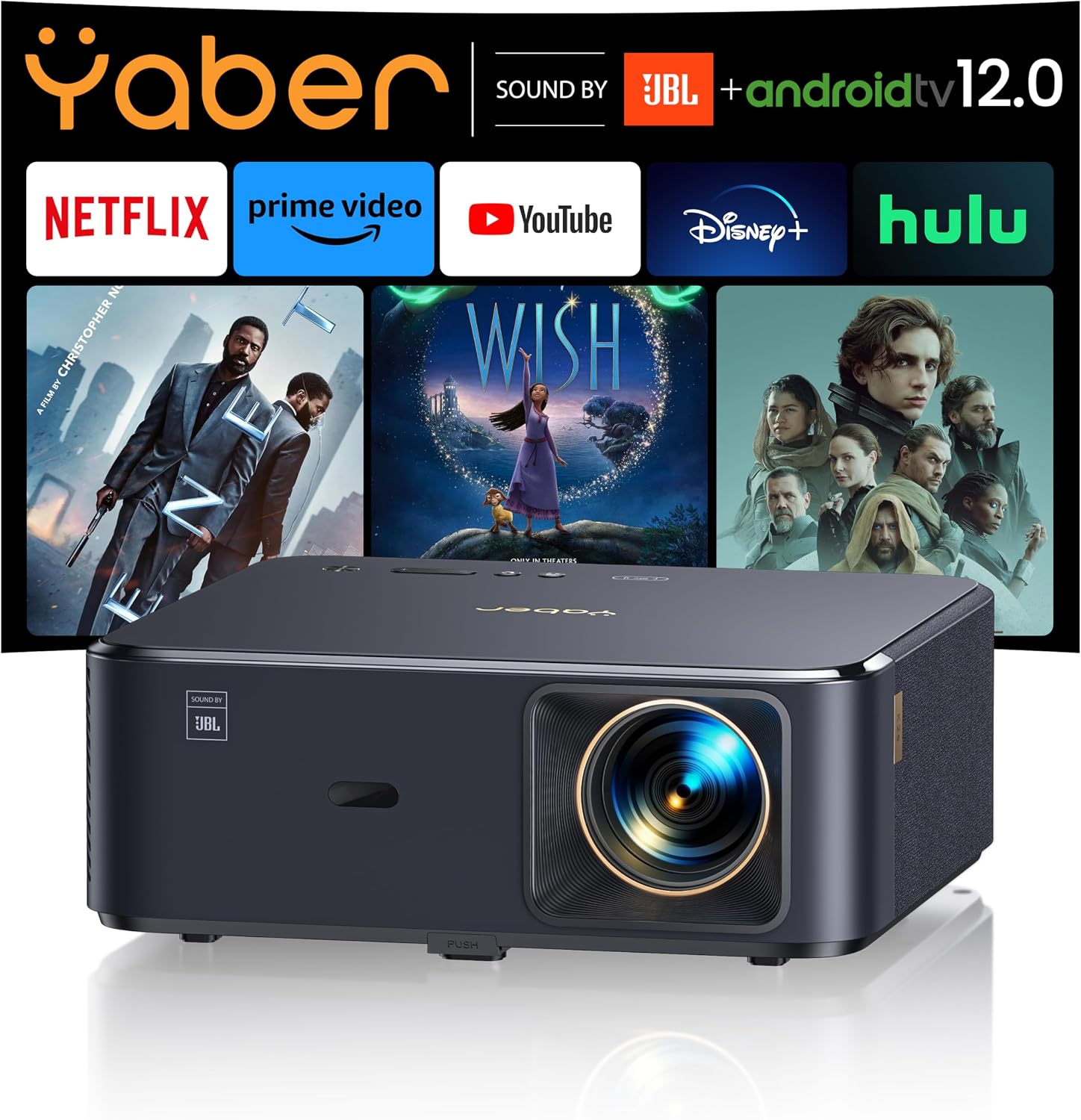
“4K supported” almost always means the projector can accept and downscale a 4K input signal — not that it natively displays 4K detail. Nearly every mini projector in this price range, from the $349.99 YABER K2s to the $599.99 Nebula Capsule 3 Laser, is native 1080p. True native-4K portable projectors (like the XGIMI Elfin Flip’s higher-end sibling models) cost significantly more.
Battery Life — Check Before You Assume “Portable” Means Cordless
Not every projector marketed as portable has a battery. The Samsung Freestyle 2nd Gen, for example, is compact and travel-friendly in size but has no built-in battery at all — it needs a wall outlet or a high-wattage USB-C power bank to run cordless. Projectors that do include batteries, like the Nebula Capsule 3 Laser (2.5 hours) and the MoGo 2 Pro, trade runtime for portability, so check the stated hours against how long you actually plan to watch.
Connectivity
WiFi and Bluetooth are standard across this category now, letting you stream directly or pair a Bluetooth speaker. HDMI is nearly universal too, which matters if you want to plug in a streaming stick, game console, or laptop instead of relying on the projector’s built-in smart TV platform.
Smart TV Platform
Google TV (used by XGIMI and Anker’s Nebula line) and Samsung’s Smart Hub/Gaming Hub are the two main built-in platforms in this guide. Both support Netflix natively with proper certification, meaning no sideloading or workarounds — verify “Netflix-certified” or “licensed Netflix” language specifically, since some budget projectors require a separate streaming stick to get the same apps.
Autofocus & Keystone Correction
Autofocus and automatic keystone (image-squaring) correction are standard across every model we compared, from budget to premium — this is no longer a premium-only feature, so don’t pay extra expecting it unless a listing specifically lacks it.
Review Volume Matters as Much as the Star Rating
A 4.3-star average built on 7,000+ reviews (like the Nebula Capsule 3 Laser) is a far more reliable signal than a 4.1-star average built on under 300 reviews (like a newer XGIMI “2025 New” listing). Newer listings can still be good products — they just carry more uncertainty until more buyers weigh in.
Bottom Line
Match the projector to how you’ll actually use it: a plug-in model is fine if it’s staying in one room; a battery is only worth paying for if you’ll genuinely move it; and ANSI-rated brightness, not marketing lumens, is the number that predicts real-world picture quality.
Related Guides
Ugo Daniel researches, compares, and writes the buying guides on Wallstores, cross-checking manufacturer specs, verified pricing, and real customer feedback across tech, home, fitness, and pet categories. He’s personally bought and used many of the kitchen appliances featured on the site, and draws on that firsthand experience in those reviews.