
How We Choose the Products We Recommend
We don’t have a warehouse full of gear to physically put through its paces — what we do instead is disciplined research. For every guide, we start with the manufacturer’s published specifications and compare them directly against competing models in the same price range. We track real, current pricing across retailers, not list prices that never actually apply, so the numbers in our comparisons reflect what you’d actually pay today. And we read, in bulk, through verified customer reviews and independent expert coverage for each product, looking for recurring complaints, common praise, and the patterns a single glossy product page won’t tell you.
Where we’ve personally bought and used a product ourselves — currently true for many of the kitchen items we cover — we say so directly in the review, and that firsthand experience shapes what we highlight. For everything else, our pros-and-cons calls come from that cross-referenced research process, not a single source or a rewritten spec sheet. We revisit guides periodically as prices shift and new models launch, and we link to multiple retailers where possible so you’re not stuck with just one option.

Ugo Daniel researches, compares, and writes the buying guides on Wallstores, cross-checking manufacturer specs, verified pricing, and real customer feedback across tech, home, fitness, and pet categories. He’s personally bought and used many of the kitchen appliances featured on the site, and draws on that firsthand experience in those reviews.
Last updated: September 2026
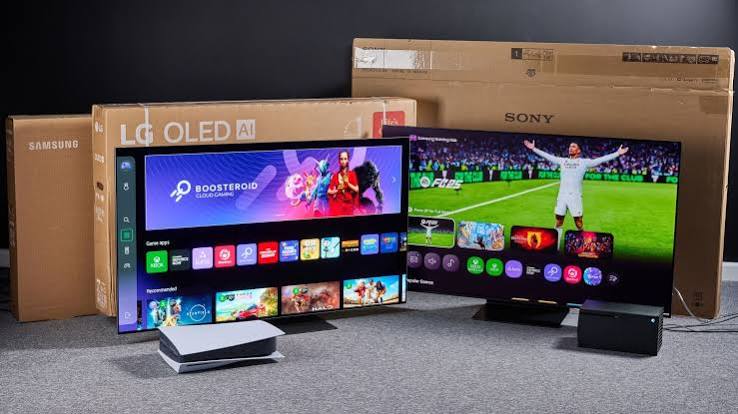
Shopping for a 4K TV in 2026 means navigating more genuinely good options than ever, as Mini-LED backlighting has trickled down into budget sets and OLED prices keep falling toward mainstream territory. Whether you’re upgrading a bedroom set, building a home theater, or just want better HDR and gaming performance for the current console generation, the picture-quality gap between price tiers has narrowed even as features like 120Hz refresh, VRR, and Dolby Vision have become table stakes rather than luxuries. We compared real, currently available models from TCL, Hisense, Samsung, LG, and Sony spanning $300 to $1,500, so you can match the right screen to your room, budget, and viewing habits without overpaying for specs you won’t use.
Quick Comparison
| Product | Best For | Price | Screen Size & Panel Type | |
|---|---|---|---|---|
| TCL Q65 Series 55-Inch QLED 4K Smart TV (Fire TV) | Best Budget | $499-$549 | 55-inch, QLED, 60Hz | See Price on Amazon → |
| Hisense 55-Inch U6 Pro Series Mini-LED ULED 4K TV | Best Value | $497.99 | 55-inch, Mini-LED, Native 144Hz | See Price on Amazon → |
| Samsung 55-Inch QN80F Series Neo QLED 4K Smart TV | Best Mid-Range | $798.00 | 55-inch, Neo QLED, Mini-LED | See Price on Amazon → |
| LG 55-Inch Class C5 Series OLED evo AI 4K Smart TV | Best Premium OLED | $1,199-$1,299 | 55-inch, OLED evo, 144Hz | See Price on Amazon → |
| Sony BRAVIA 7 55-Inch Mini-LED QLED 4K Smart Google TV (K-55XR70) | Best for Gaming & Motion | $1,398-$1,599 | 55-inch, Mini-LED, XR Processor | See Price on Amazon → |
1. TCL Q65 Series 55-Inch QLED 4K Smart TV (Fire TV) — Best Budget
 The TCL Q65 remains one of the smartest buys in the sub-$550 tier. Its QLED panel delivers punchier color than typical entry-level LEDs, and Dolby Vision/HDR10+ support makes streaming content look noticeably richer than the price suggests. Fire TV integration means fast app loading and a familiar remote if you already use Amazon devices. TCL’s Game Accelerator mode trims input lag for casual console gaming, though at 60Hz native refresh it won’t satisfy serious gamers chasing 120Hz. Local dimming is basic edge-lit rather than full-array, so black levels wash out in dark scenes and off-axis viewing dims colors quickly. Still, for a guest room, dorm, or budget-conscious living room, it’s hard to beat the picture-per-dollar here. On Amazon, it holds a 4.2-star average across 833 ratings.
Pros: Vivid QLED color for the price, Dolby Vision and HDR10+ support, Fast Fire TV smart platform, Game Accelerator mode for consoles.
Cons: Edge-lit backlight limits contrast, Only 60Hz native refresh, Weak off-axis viewing angles.
2. Hisense 55-Inch U6 Pro Series Mini-LED ULED 4K TV — Best Value
 Hisense’s U6 Pro punches well above its price class by pairing Mini-LED backlighting with a native 144Hz refresh rate — a combination you rarely see under $500. That means smoother motion and deeper blacks than any edge-lit competitor nearby, plus Dolby Vision IQ and HDR10+ for properly tone-mapped HDR. The built-in subwoofer adds noticeably more low-end than typical flat-panel speakers, and Fire TV runs smoothly with Alexa+ voice control built in. The tradeoffs show up in peak brightness, which falls short of pricier Mini-LED sets, and blooming halos can still appear around bright objects on very dark backgrounds. For most living rooms watching movies, sports, and casual gaming, it’s the best value-per-inch in Mini-LED right now. It carries a 4.3-star average across 286 Amazon ratings.
Pros: Mini-LED with native 144Hz refresh rate, Dolby Vision IQ and HDR10+, built-in subwoofer for extra bass, Fire TV with Alexa+ built in.
Cons: Peak brightness trails pricier Mini-LEDs, Some blooming in high-contrast scenes.
3. Samsung 55-Inch QN80F Series Neo QLED 4K Smart TV — Best Mid-Range
 The QN80F moves Samsung’s mid-range up into genuine Neo QLED Mini-LED territory, replacing the outgoing Q80D’s edge-style Direct Full Array with denser Mini-LED zones and a newer NQ4 AI Gen2 processor for noticeably better contrast and brightness uniformity. Samsung’s Tizen-based Vision AI smart platform remains the snappiest, most polished interface in the TV business. Object Tracking Sound Lite adds directional audio cleverness that budget sets skip, and Motion Xcelerator handles 120Hz gaming with Samsung’s Game Bar overlay for FreeSync Premium Pro. The catch is Samsung’s continued refusal to support Dolby Vision, relying solely on HDR10+ — a real drawback if your streaming library leans Netflix or Disney+. Still, for color accuracy and everyday usability, the QN80F is a dependable mid-range workhorse. It holds a 4.1-star average across 223 Amazon ratings.
Pros: Neo QLED Mini-LED local dimming, Excellent Tizen/Vision AI smart TV interface, 120Hz with FreeSync Premium Pro, Strong color volume and brightness.
Cons: No Dolby Vision support, Pricier than similarly specced rivals.
4. LG 55-Inch Class C5 Series OLED evo AI 4K Smart TV — Best Premium OLED
 LG’s C5 is the mainstream OLED that home theater enthusiasts keep recommending, and for good reason. Its self-lit pixels deliver perfect per-pixel black levels and viewing angles no LED-based TV can match, while the Alpha 9 AI Gen8 processor sharpens upscaling and improves brightness handling over the outgoing C4. Four HDMI 2.1 ports at 144Hz make it one of the most complete gaming TVs available, fully supporting VRR, ALLM, and Dolby Vision Gaming for PS5, Xbox Series X, and high-end PCs alike. webOS remains cluttered with ads and recommendation tiles, and OLED’s peak brightness still trails the best Mini-LED sets in very bright rooms. For movie nights, contrast-obsessed viewers, and gamers wanting the full HDMI 2.1 feature set, the C5 is the OLED to beat at this price. It holds a 4.4-star average across more than 1,500 Amazon ratings.
Pros: Perfect blacks and infinite contrast, Four HDMI 2.1 ports at 144Hz, Alpha 9 AI Gen8 processor, Excellent for both movies and gaming.
Cons: webOS interface has ad clutter, Lower peak brightness in bright rooms, Risk of burn-in with static content.
5. Sony BRAVIA 7 55-Inch Mini-LED QLED 4K Smart Google TV (K-55XR70) — Best for Gaming & Motion
 The Bravia 7 is Sony’s answer to the Mini-LED arms race, and it shows in motion handling and color accuracy that few rivals match at this price. Sony’s XR Backlight Master Drive controls thousands of Mini-LED zones with unusually precise local dimming, avoiding the blooming that plagues cheaper Mini-LED sets, while the XR Processor’s motion interpolation makes sports and fast action look exceptionally smooth without the usual soap-opera artifacts. PS5 owners get exclusive perks like Auto HDR Tone Mapping. Google TV is responsive and well-integrated with Bravia Core film streaming. The downsides are just two HDMI 2.1 ports rather than four, and a price premium over similarly specced Hisense and TCL Mini-LEDs. Still, picture-quality purists who prioritize motion and color accuracy will notice the difference immediately. It carries a 4.1-star average across 335 Amazon ratings.
Pros: XR Backlight Master Drive Mini-LED control, Excellent motion handling for sports and gaming, PS5-exclusive picture features, Strong color accuracy out of the box.
Cons: Only two HDMI 2.1 ports, Premium pricing vs. similar Mini-LED rivals.
Related Guides
Ugo Daniel researches, compares, and writes the buying guides on Wallstores, cross-checking manufacturer specs, verified pricing, and real customer feedback across tech, home, fitness, and pet categories. He’s personally bought and used many of the kitchen appliances featured on the site, and draws on that firsthand experience in those reviews.