
Choosing the right cooler can make or break a camping trip — nobody wants warm drinks and soggy sandwiches three days into a backcountry stay. The camping cooler market has exploded with options, from rugged rotomolded hard coolers that shrug off wildlife encounters to lightweight soft coolers you can strap to a backpack. But more choice means more confusion: how much should you actually spend, and which features matter for your specific trip? We compared five standout camping coolers for 2026, each excelling in a different scenario — best overall performance, best for backpacking, best on a budget, best for week-long ice retention, and best for rolling heavy loads to the campsite.
Quick Comparison
| Cooler | Best For | Capacity | Price | |
|---|---|---|---|---|
| YETI Tundra 45 | Best Overall | 54 cans / 37 lbs ice | $325 | See Price on Amazon → |
| YETI Hopper M20 | Best Backpack Cooler | 36 cans / 22 lbs ice | $325 | See Price on Amazon → |
| Coleman Chiller 48-Quart | Best Budget | 76 cans | $54.99 | See Price on Amazon → |
| Pelican 50QT Elite | Best for Long Trips | ~38 cans | $310.95 | See Price on Amazon → |
| YETI Tundra Haul | Best Wheeled Cooler | 82 cans / 64 lbs ice | $450 | See Price on Amazon → |
1. YETI Tundra 45 Hard Cooler — Best Overall Hard Cooler
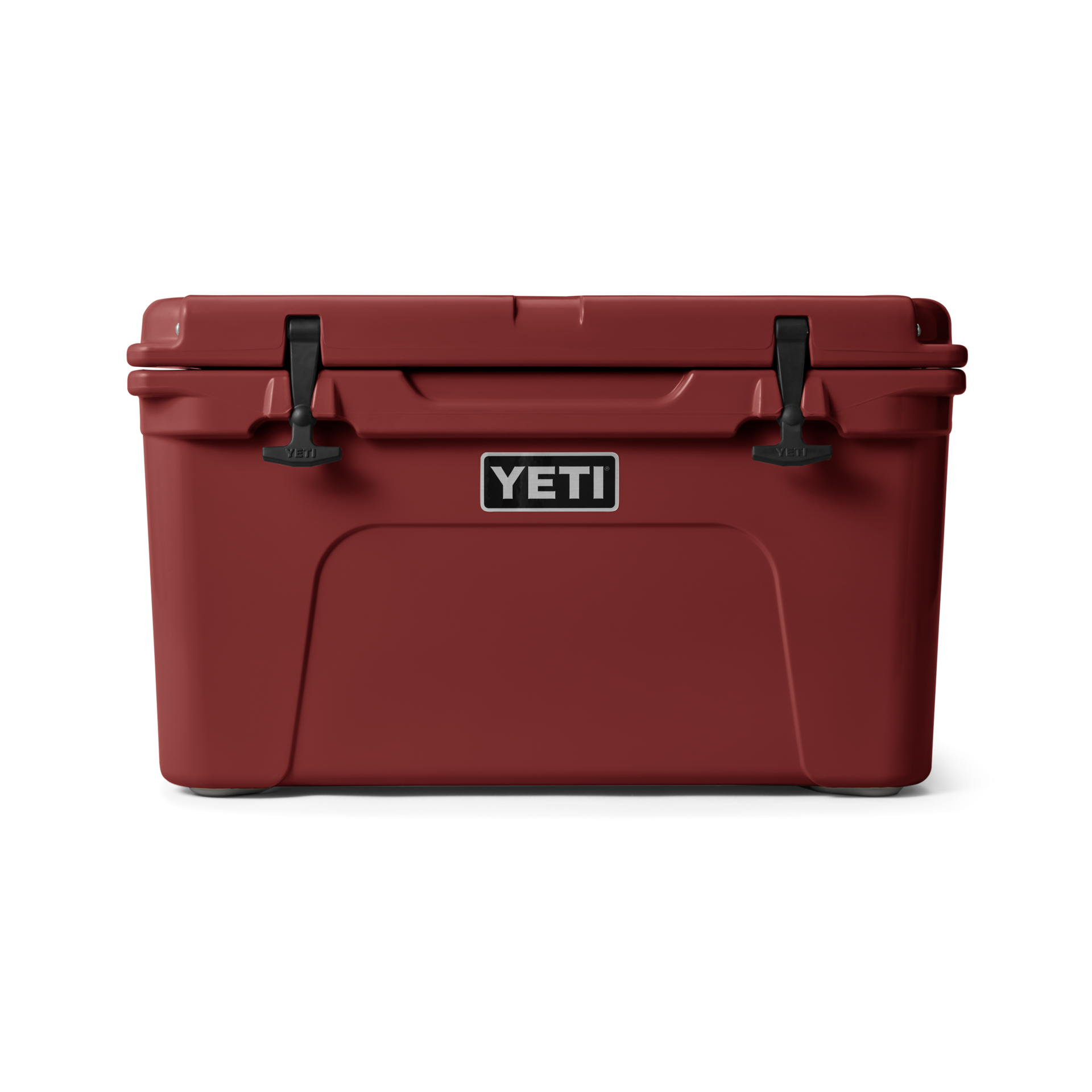 The Tundra 45 is the benchmark hard cooler the rest of the market is measured against: rotomolded toughness, serious insulation, and a size that fits a long weekend for a family or small group without becoming unmanageable to carry. It’s the safe “if you only buy one cooler” recommendation for campers who want durability over decades, not just one season, backed by reinforced T-Rex lid latches and a NeverFail hinge system.
Pros: extremely durable, wildlife-resistant rotomolded construction, thick foam insulation holds ice noticeably longer than typical big-box coolers, reinforced, near-indestructible lid latches and hinge system, strong resale value and long product lifespan.
Cons: expensive relative to capacity for a 45-quart class cooler, heavy even when empty (24.6 lbs) before adding ice and food, no wheels — awkward to carry any distance fully loaded.
2. YETI Hopper M20 Backpack Soft Cooler — Best Soft/Backpack Cooler
 For backpackers, kayakers, or anyone hiking gear away from the trailhead, a rigid cooler simply isn’t practical. The Hopper M20 is one of the few soft coolers built as an actual load-bearing backpack rather than a cooler with straps bolted on, making it the clear pick when carry comfort matters more than raw ice-holding time. Its fully leakproof welded liner is safe to submerge or hose out.
Pros: genuine backpack-style carry with padded straps — actually hikeable, fully leakproof welded liner — safe to submerge or hose out, much lighter than a hard cooler of comparable capacity (5.6 lbs), collapses for storage when empty.
Cons: same price as a 45-quart hard cooler despite much smaller capacity, less ice retention than a rotomolded hard cooler over multi-day trips, soft sides offer no protection against being crushed or sat on.
3. Coleman Chiller 48-Quart Hard Cooler — Best Budget

Pros: very low price for a 48-quart capacity cooler, lightweight (8.1 lbs) and easy for one person to carry, large capacity-to-price ratio — good for family car camping on a budget, made in the USA per Coleman’s own marketing.
Cons: uninsulated lid is a meaningful weak point versus premium rotomolded coolers, 3-day ice retention claim is modest compared to premium coolers.
4. Pelican 50QT Elite Cooler — Best for Extended Ice Retention
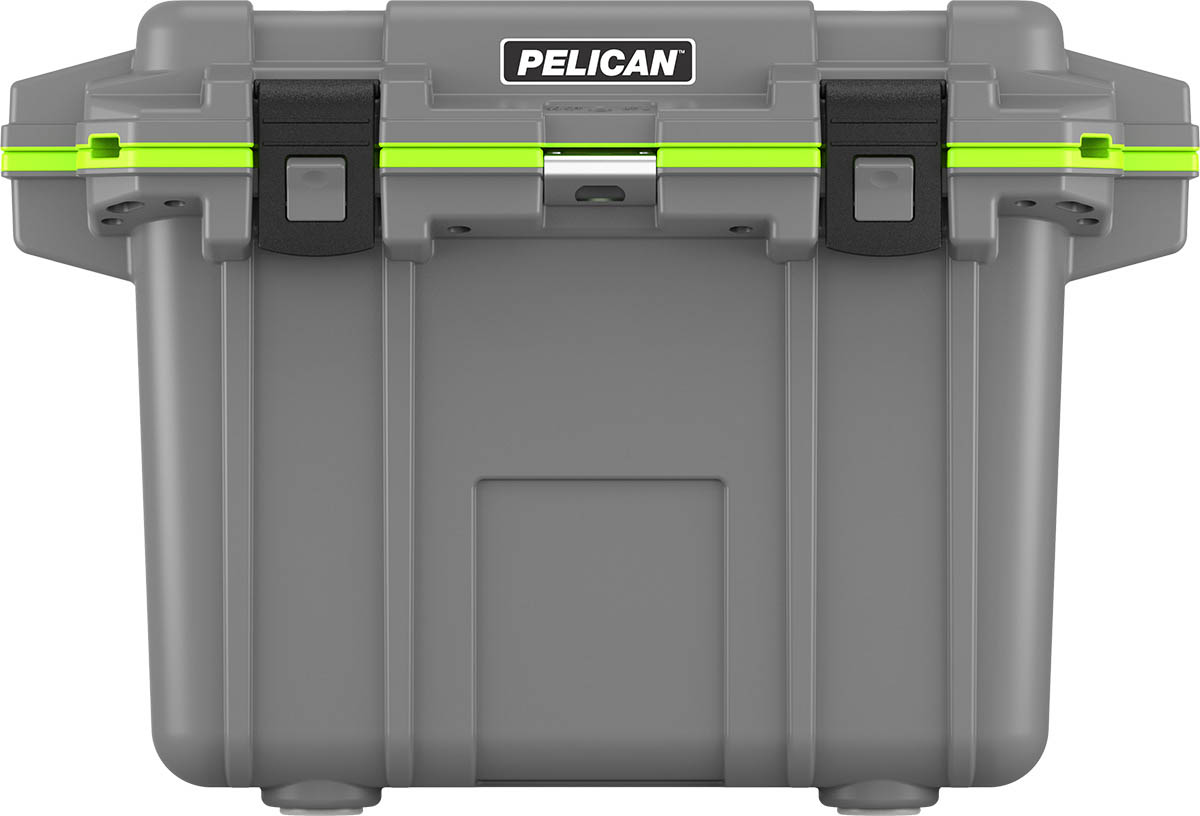 For extended trips, a week at a remote campsite, a multi-day fishing or hunting trip with no resupply, ice retention duration matters more than any other spec. Pelican built its Elite line specifically around maximizing that number with 2-inch-thick insulation and a tighter freezer-style gasket seal than most competitors, making it the pick when “will my ice survive until day 5” is the deciding question.
Pros: purpose-built and marketed specifically around long-duration ice retention, very thick (2 in.) insulation and a tight freezer-style gasket seal, stainless steel hardware and heavy-duty ABS latches rated for rough handling, wildlife-resistant certification available on several Pelican Elite sizes.
Cons: heaviest cooler on this list at 32.2 lbs empty — a two-person carry when full, premium price similar to YETI’s comparable hard-cooler sizes, no wheels on this model despite the weight.
5. YETI Tundra Haul Wheeled Cooler — Best Rolling/Wheeled Cooler
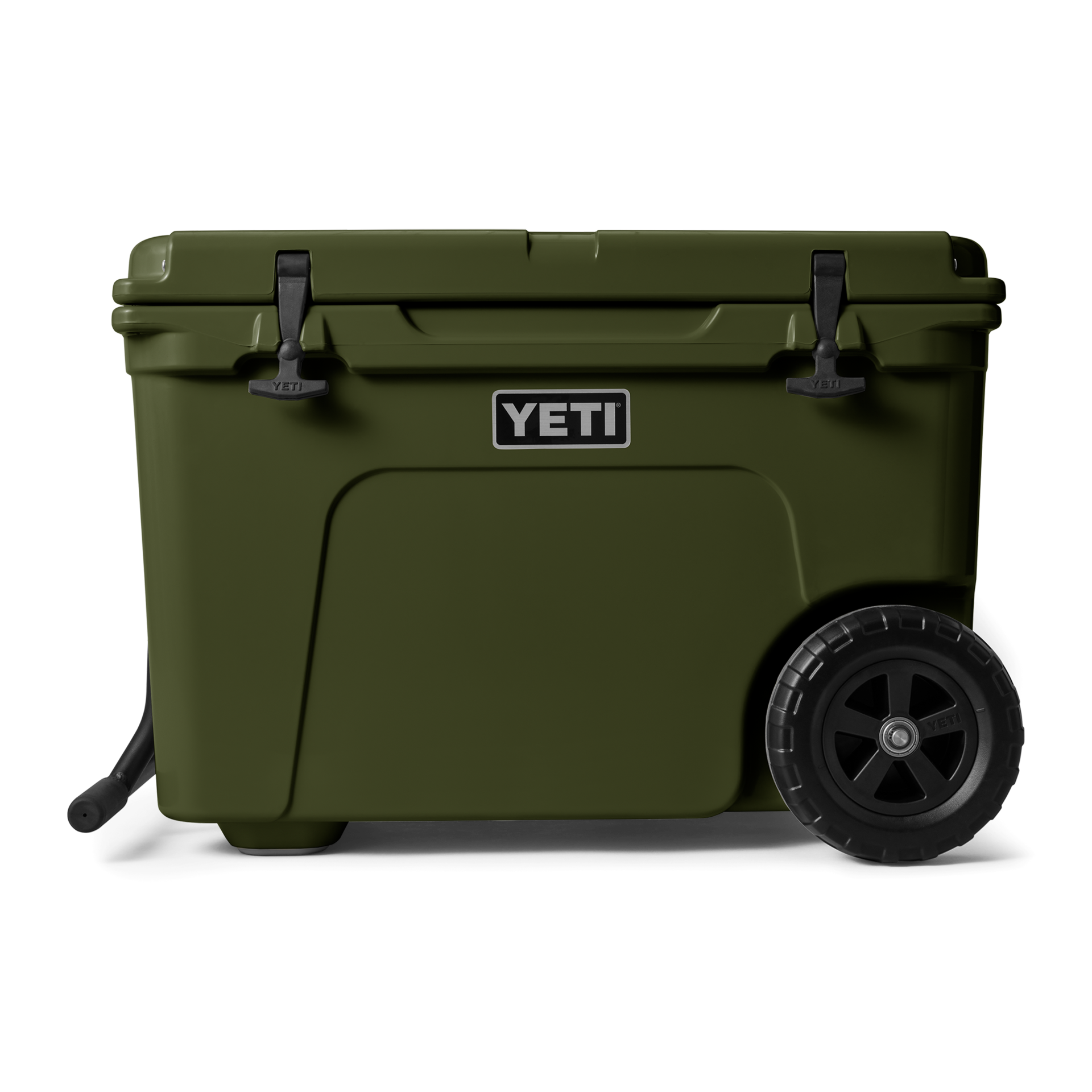 Hauling a fully loaded cooler across a gravel campground or down a dock is where most cheap wheeled coolers fail: the wheels flatten, jam, or snap off. The Tundra Haul applies YETI’s rotomolded durability standard to a wheeled design with puncture-proof NEVERFLAT wheels and reinforced welded aluminum hardware, making it the pick for anyone regularly moving a heavy, fully-loaded cooler by hand instead of by truck bed.
Pros: same rotomolded durability as the Tundra hard-cooler line, plus mobility, large capacity (82 cans / 64 lbs ice) suitable for group camping, puncture-resistant wheels solve the classic wheeled-cooler failure point, welded aluminum handle and axle hardware built for rough terrain.
Cons: very expensive at $450 — the most costly product on this list, heaviest single unit here empty (37.5 lbs) before adding ice and contents, overkill in size and price for solo campers or short trips.