
How We Choose the Products We Recommend
We don’t have a warehouse full of gear to physically put through its paces — what we do instead is disciplined research. For every guide, we start with the manufacturer’s published specifications and compare them directly against competing models in the same price range. We track real, current pricing across retailers, not list prices that never actually apply, so the numbers in our comparisons reflect what you’d actually pay today. And we read, in bulk, through verified customer reviews and independent expert coverage for each product, looking for recurring complaints, common praise, and the patterns a single glossy product page won’t tell you.
Where we’ve personally bought and used a product ourselves — currently true for many of the kitchen items we cover — we say so directly in the review, and that firsthand experience shapes what we highlight. For everything else, our pros-and-cons calls come from that cross-referenced research process, not a single source or a rewritten spec sheet. We revisit guides periodically as prices shift and new models launch, and we link to multiple retailers where possible so you’re not stuck with just one option.

Ugo Daniel researches, compares, and writes the buying guides on Wallstores, cross-checking manufacturer specs, verified pricing, and real customer feedback across tech, home, fitness, and pet categories. He’s personally bought and used many of the kitchen appliances featured on the site, and draws on that firsthand experience in those reviews.
Last updated: September 2026
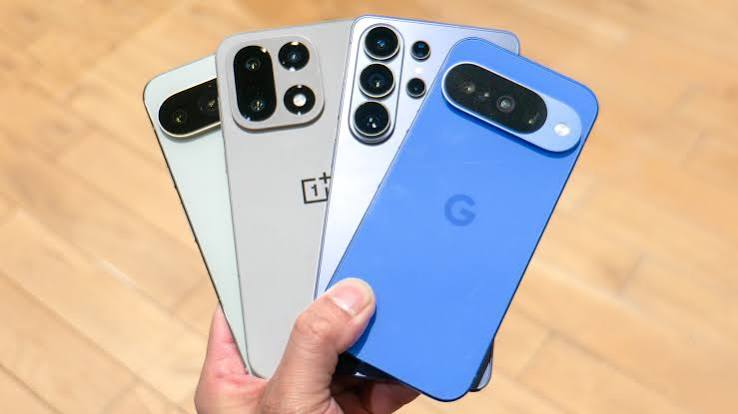
Shopping for an Android phone in 2026 means wading through a crowded field of budget handsets, mid-range value kings, and $1,000-plus flagships that all promise to be the last phone you’ll ever need. The good news: you don’t have to overspend to get a genuinely great phone anymore. We rounded up five standout Android devices representing the best of each price tier, from a sub-$200 starter phone to Samsung’s latest foldable. Whether you’re upgrading a cracked screen, buying your kid their first smartphone, or chasing the newest camera tech, one of these picks is almost certainly right for you and your budget.
Quick Comparison
| Product | Best For | Price | Battery Life | |
|---|---|---|---|---|
| Samsung Galaxy A17 5G | Best Budget Pick | $224.99 | 5,000mAh, ~2 days | See Price on Amazon → |
| Google Pixel 9a | Best Camera Under $500 | $485.00 | 5,100mAh, ~30 hrs video | See Price on Amazon → |
| OnePlus 15R | Best Value Flagship | $759.00 | 7,400mAh, 80W wired charging | See Price on Amazon → |
| Samsung Galaxy S25 | Best Overall Flagship | $694.44 | 4,000mAh, all-day battery | See Price on Amazon → |
| Samsung Galaxy Z Flip7 FE | Best Foldable | $699.99 | All-day battery life | See Price on Amazon → |
1. Samsung Galaxy A17 5G — Best Budget Pick
 The Galaxy A17 5G is proof that a $225 phone doesn’t have to feel like one. It packs a large 6.7-inch Super AMOLED display with a smooth 90Hz refresh rate, a 50MP main camera that handles daylight shots well, and a 5,000mAh battery that comfortably lasts a full day of heavy use. Samsung backs it with six years of security updates, unheard of at this price, meaning it stays usable far longer than typical budget phones. Performance is fine for calls, texting, and social media, but it bogs down with heavier apps or multitasking, and low-light photos are noticeably soft. Still, as an affordable primary phone, a reliable backup, or a first phone for a teenager, it’s one of the smartest budget buys in Samsung’s lineup. On Amazon, it holds a 4.0-star average across more than 1,900 ratings.
Pros: Bright 90Hz AMOLED display, Six years of promised updates, All-day battery life, Affordable enough for a backup phone.
Cons: Weak low-light camera performance, Struggles with demanding apps.
2. Google Pixel 9a — Best Camera Under $500
 The Pixel 9a remains the phone we recommend most to anyone who wants flagship-quality photos without a flagship price. Its 48MP main camera and Google’s computational photography chops consistently outshoot phones costing twice as much, especially in tricky lighting. The Tensor G4 chip runs Android smoothly, and Google promises a class-leading seven years of OS and security updates. Clean software with genuinely useful AI features like Magic Editor and Call Screen adds real value day to day. The tradeoffs are a plain, plastic-feeling design and a camera bump some find polarizing, plus performance that lags noticeably behind true flagships in gaming or heavy multitasking. For most everyday users, though, it’s the best all-around value in Android right now. It carries a 4.6-star average across more than 1,800 Amazon ratings.
Pros: Excellent camera for the price, Seven years of software support, Genuinely useful AI features, Long battery life.
Cons: Design feels plain compared to rivals, Not built for gaming or heavy multitasking.
3. OnePlus 15R — Best Value Flagship
 The OnePlus 15R is the phone to buy if you want flagship performance without a flagship bill. It runs on the newer Snapdragon 8 Gen 5 chip that handles gaming and heavy multitasking without breaking a sweat, and its massive 7,400mAh battery paired with 80W wired charging means you’ll rarely think about topping up. The 165Hz display is vibrant and exceptionally fast, and OxygenOS stays close to stock Android with useful extras layered on. Camera performance is good but not great, trailing Pixel and Samsung in low light and zoom, and its software update commitment is shorter than Google’s or Samsung’s. Even so, for buyers who prioritize raw speed, battery life, and charging speed over camera bragging rights, it’s hard to beat the 15R’s price-to-performance ratio. This listing is still building review volume, but it currently holds a 4.3-star average across 135 Amazon ratings.
Pros: Flagship-level performance for less, Huge battery with fast 80W charging, Fluid 165Hz display, Near-stock, fast software experience.
Cons: Camera trails Pixel/Samsung in low light, Shorter update window than Google or Samsung.
4. Samsung Galaxy S25 — Best Overall Flagship
 The Galaxy S25 is the compact flagship for people who want top-tier performance without carrying around an oversized phone. Its Snapdragon 8 Elite chip handles anything you throw at it, from gaming to multitasking, and the triple-camera system captures sharp, punchy photos in nearly any lighting. Samsung’s Galaxy AI tools, including live translation and Circle to Search, are genuinely handy rather than gimmicky. Battery life is good but not class-leading given the phone’s smaller size, and the base 128GB storage tier fills up quickly with 4K video and photos. It’s also priced well above the value picks on this list. But if you want a true flagship experience, backed by seven years of updates, in a size that fits comfortably in one hand, the S25 is the safest, most well-rounded choice. It holds a 4.5-star average across more than 900 Amazon ratings.
Pros: Flagship-tier Snapdragon 8 Elite performance, Excellent all-around camera system, Compact, one-hand-friendly size, Seven years of software updates.
Cons: Battery life is good, not great, Base storage fills up fast.
5. Samsung Galaxy Z Flip7 FE — Best Foldable
 The Galaxy Z Flip7 FE is Samsung’s more affordable take on the flip-phone formula, and the version currently easiest to actually find new. Its FlexWindow cover screen runs full apps, not just widgets, so you can reply to texts, check maps, or snap selfies without unfolding it. Once open, the crease is unobtrusive in daily use, and the 50MP main camera performs solidly for its price. Battery life is the traditional weak point of the flip-phone category, and the FE isn’t dramatically different, often needing a midday top-up on heavy days. It’s also the priciest phone on this list, and foldables remain inherently more fragile long-term. Still, for buyers who want a pocketable, fun foldable without paying flagship-fold prices, it’s the most accessible way into Samsung’s flip lineup. It carries a 4.4-star average across 272 Amazon ratings.
Pros: FlexWindow cover screen runs full apps, Compact, pocketable when folded, Barely visible screen crease, More affordable than Samsung’s flagship fold.
Cons: Battery life needs a midday top-up on heavy days, Most expensive phone on this list, Foldables carry more long-term durability risk.
Related Guides
Ugo Daniel researches, compares, and writes the buying guides on Wallstores, cross-checking manufacturer specs, verified pricing, and real customer feedback across tech, home, fitness, and pet categories. He’s personally bought and used many of the kitchen appliances featured on the site, and draws on that firsthand experience in those reviews.