
How We Choose the Products We Recommend
We don’t have a warehouse full of gear to physically put through its paces — what we do instead is disciplined research. For every guide, we start with the manufacturer’s published specifications and compare them directly against competing models in the same price range. We track real, current pricing across retailers, not list prices that never actually apply, so the numbers in our comparisons reflect what you’d actually pay today. And we read, in bulk, through verified customer reviews and independent expert coverage for each product, looking for recurring complaints, common praise, and the patterns a single glossy product page won’t tell you.
Where we’ve personally bought and used a product ourselves — currently true for many of the kitchen items we cover — we say so directly in the review, and that firsthand experience shapes what we highlight. For everything else, our pros-and-cons calls come from that cross-referenced research process, not a single source or a rewritten spec sheet. We revisit guides periodically as prices shift and new models launch, and we link to multiple retailers where possible so you’re not stuck with just one option.

Ugo Daniel researches, compares, and writes the buying guides on Wallstores, cross-checking manufacturer specs, verified pricing, and real customer feedback across tech, home, fitness, and pet categories. He’s personally bought and used many of the kitchen appliances featured on the site, and draws on that firsthand experience in those reviews.
Last updated: September 2026
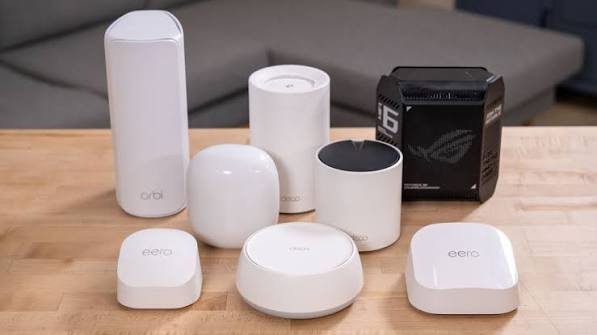
Dead zones, buffering video calls, and a router stuck in a closet are all symptoms of the same problem — and in 2026, a mesh Wi-Fi system is the easiest fix. The category has matured fast: Wi-Fi 7 mesh kits with multi-gig wired backhaul are now mainstream, while budget Wi-Fi 6 systems have gotten cheaper and genuinely good enough for most homes. Below we compare five current, in-stock picks — from a sub-$200 budget option to a 10,000-square-foot flagship — to help you match the right system to your home size, budget, and internet plan.
Quick Comparison
| Product | Best For | Price | Wi-Fi Standard | |
|---|---|---|---|---|
| TP-Link Deco BE85 | Best Overall | $719.99 (2-pack) | Wi-Fi 7 | See Price on Amazon → |
| ASUS ZenWiFi BT8 | Best for Gaming | $599.99 (2-pack) | Wi-Fi 7 | See Price on Amazon → |
| NETGEAR Orbi 970 (RBE973S) | Best for Large Homes | $1,999.99 | Wi-Fi 7 | See Price on Amazon → |
| Amazon eero Pro 7 | Best for Easy Setup | $699.99 (3-pack) | Wi-Fi 7 | See Price on Amazon → |
| TP-Link Deco X55 | Best Budget | $169.99 (3-pack) | Wi-Fi 6 | See Price on Amazon → |
1. TP-Link Deco BE85 (BE22000) — Best Overall
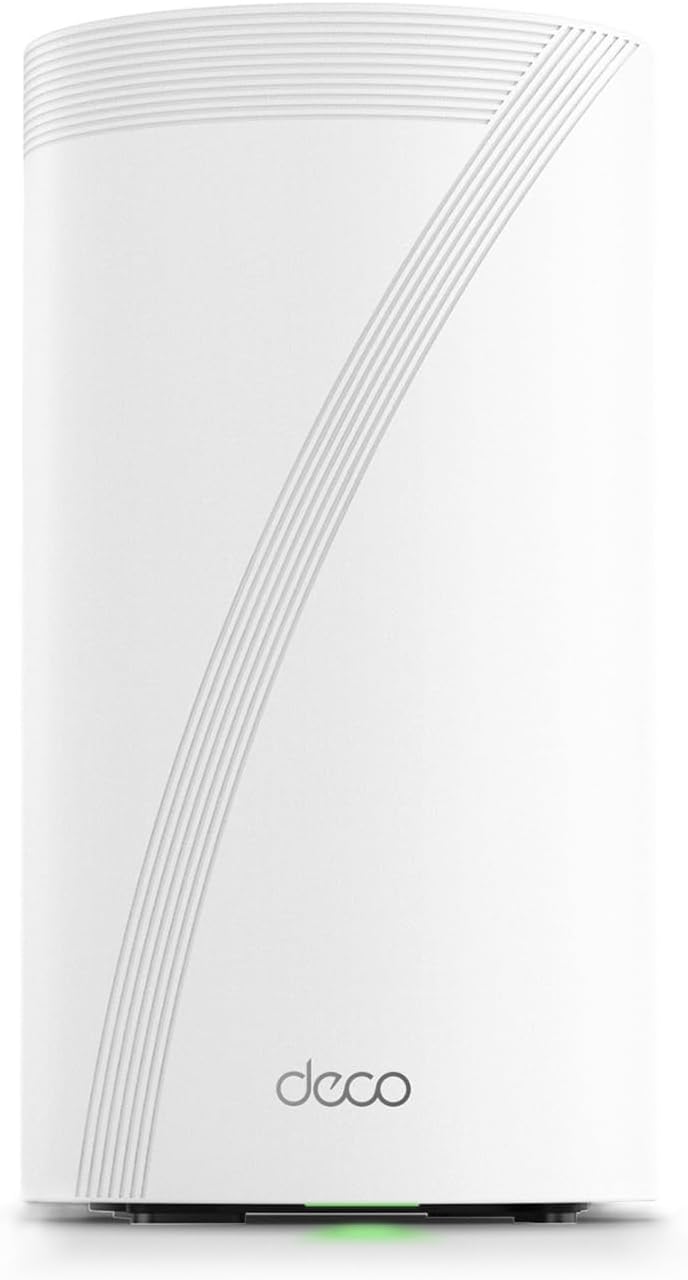 The Deco BE85 is TP-Link’s flagship Wi-Fi 7 mesh system, and it delivers exactly what that promises: tri-band BE22000 speeds, 10 Gbps and 2.5 Gbps wired backhaul ports for a rock-solid connection between nodes, and AI-driven roaming that keeps devices from clinging to a weak signal as you move through the house. Reviewers consistently praise it as one of the best-performing Wi-Fi 7 mesh kits on the market, with HomeShield security and parental controls included at no extra cost. On Amazon, it holds a 4.0-star average across 270 ratings.
Pros: Excellent real-world Wi-Fi 7 (BE22000) throughput, Multiple 10G/2.5G wired backhaul ports future-proof the network, AI-driven seamless roaming for a stable connection, Free basic HomeShield security and parental controls.
Cons: Expensive, especially stepping up to a 2- or 3-pack, Overkill for smaller homes or sub-gigabit internet plans, Bulkier unit design than budget mesh nodes.
2. ASUS ZenWiFi BT8 — Best for Gaming
 The ZenWiFi BT8 brings ASUS’s gaming and networking pedigree to a mesh system, pairing Wi-Fi 7 tri-band speeds and 6 GHz Multi-Link Operation for lower latency with the same AiMesh compatibility and mobile game accelerator tools ASUS builds into its gaming routers. It’s a smart pick for households with a gaming PC or console that wants router-level QoS and low-latency tuning rather than just blanket coverage. ASUS’s own listing specs it with seven internal antennas and eight high-power front-end modules covering up to 5,900 square feet as a 2-pack.
Pros: Wi-Fi 7 tri-band with 6 GHz MLO for lower gaming latency, Built-in QoS and mobile game accelerator via the ASUS app, AiMesh lets you fold in existing compatible ASUS routers, AiProtection security and parental controls included.
Cons: App/interface is less polished than TP-Link’s or eero’s, Pricier than budget Wi-Fi 6 mesh kits, 2-pack coverage may need a third unit for bigger homes.
3. NETGEAR Orbi 970 Series (RBE973S) — Best for Large Homes
 When square footage is the priority, the Orbi 970 is built for it: a router plus two satellites rated to cover up to 10,000 sq. ft., with quad-band Wi-Fi 7 architecture that keeps a dedicated backhaul band separate from client traffic so speeds don’t degrade as you add rooms. A 10-Gig WAN port makes it one of the few mesh systems that can actually keep up with a multi-gigabit fiber plan, and built-in NETGEAR Armor adds real-time security monitoring. Worth noting: this listing carries a 3.6-star average across 410 Amazon ratings, lower than the other picks on this list.
Pros: Massive rated coverage, up to 10,000 sq. ft. with the 3-piece kit, Quad-band design with dedicated Wi-Fi 7 backhaul, 10-Gig WAN port supports multi-gig fiber internet plans, NETGEAR Armor security monitoring included.
Cons: Very expensive, among the priciest consumer mesh systems, Satellites are large and require accessible power outlets, Price premium over cheaper Orbi tiers isn’t always matched by gains.
4. Amazon eero Pro 7 — Best for Easy Setup & Smart Home Integration
 Eero built its reputation on dead-simple setup, and the Pro 7 keeps that reputation intact while adding Wi-Fi 7 tri-band speeds and tight integration with Alexa and Amazon’s smart home ecosystem. Reviewers have praised its reliability and painless app-based setup, even if the real-world speed jump over the cheaper eero 7 is modest for most typical broadband plans. For anyone who wants a mesh system that just works and already lives in the Alexa ecosystem, it’s hard to beat for simplicity. On Amazon, it holds a 4.4-star average across 1,461 ratings.
Pros: Among the simplest, most polished app setup experiences, Deep Alexa and Amazon smart home integration, Solid Wi-Fi 7 tri-band performance for typical home plans, Optional eero Plus adds ad-blocking, VPN, and parental controls.
Cons: Most advanced security features locked behind eero Plus, Fewer Ethernet ports per node than competitors, Real-world speed gains over the cheaper eero 7 can be underwhelming.
5. TP-Link Deco X55 (AX3000) — Best Budget
 The Deco X55 has remained one of the most recommended budget mesh picks for several years running, and it still holds up: a 3-pack covers up to 6,500 sq. ft. for well under $200, with Ethernet backhaul support if you want a more reliable connection between nodes. It doesn’t have Wi-Fi 7’s headline speeds, but AX3000 Wi-Fi 6 is still plenty fast for typical broadband plans, streaming, and video calls across a full-size home. It’s also one of Amazon’s best-selling mesh systems outright, with a 4.4-star average across more than 13,000 ratings.
Pros: Very affordable, a 3-pack regularly sells well under $200, Covers up to 6,500 sq. ft. across three units, Supports wired Ethernet backhaul for reliable node-to-node links, Free HomeShield basic security and parental controls included.
Cons: Wi-Fi 6, not Wi-Fi 7, less future-proof, Only 3 Gigabit Ethernet ports per unit, Dual-band design tops out at lower peak speeds than tri-band flagships.
Related Guides
Ugo Daniel researches, compares, and writes the buying guides on Wallstores, cross-checking manufacturer specs, verified pricing, and real customer feedback across tech, home, fitness, and pet categories. He’s personally bought and used many of the kitchen appliances featured on the site, and draws on that firsthand experience in those reviews.